OFC 20 Telecom Optical Fiber Draw Tower

Datacom fiber manufacturing solutions

Your partner in fiber production technology​

From glass to cable

Manufacturing technologies for high-density datacom and data center interconnect infrastructure

AI, cloud computing and data center expansion are driving demand for higher capacity, lower latency and greater fiber density. As optical connectivity moves deeper into data center architectures, cable manufacturers need production technologies that can support increasingly compact, high-fiber-count cable designs.

Nextrom provides manufacturing solutions across the datacom fiber value chain, from advanced preform technologies and fiber draw process to fiber identification, rollable ribbon production, bundling, SZ super-bundling and final cable jacketing.

manufacturing solutions for datacom fiber & cables

Building the next generation of high-density datacom cables

Data center interconnect and AI-driven network architectures are pushing optical fiber cables to new levels of density, performance and scalability.

High-fiber-count cable designs require more than individual process steps. They require a controlled production chain where every layer contributes to the final cable’s reliability, attenuation performance, mechanical stability and manufacturing scalability.

From fiber design and drawing to identification, ribboning, bundling and jacketing, each step must be optimized for high-density cable structures. Nextrom technologies help manufacturers build datacom cables layer by layer, transforming optical glass into fibers, fibers into rollable ribbons, ribbons into organized bundles and bundles into finished fiber optic cables.


From glass to high-density datacom cables

OFC SZ super bundling datacom cables

manufacturing technologies from preform and fiber draw to ribboning, bundling and final cable jacketing

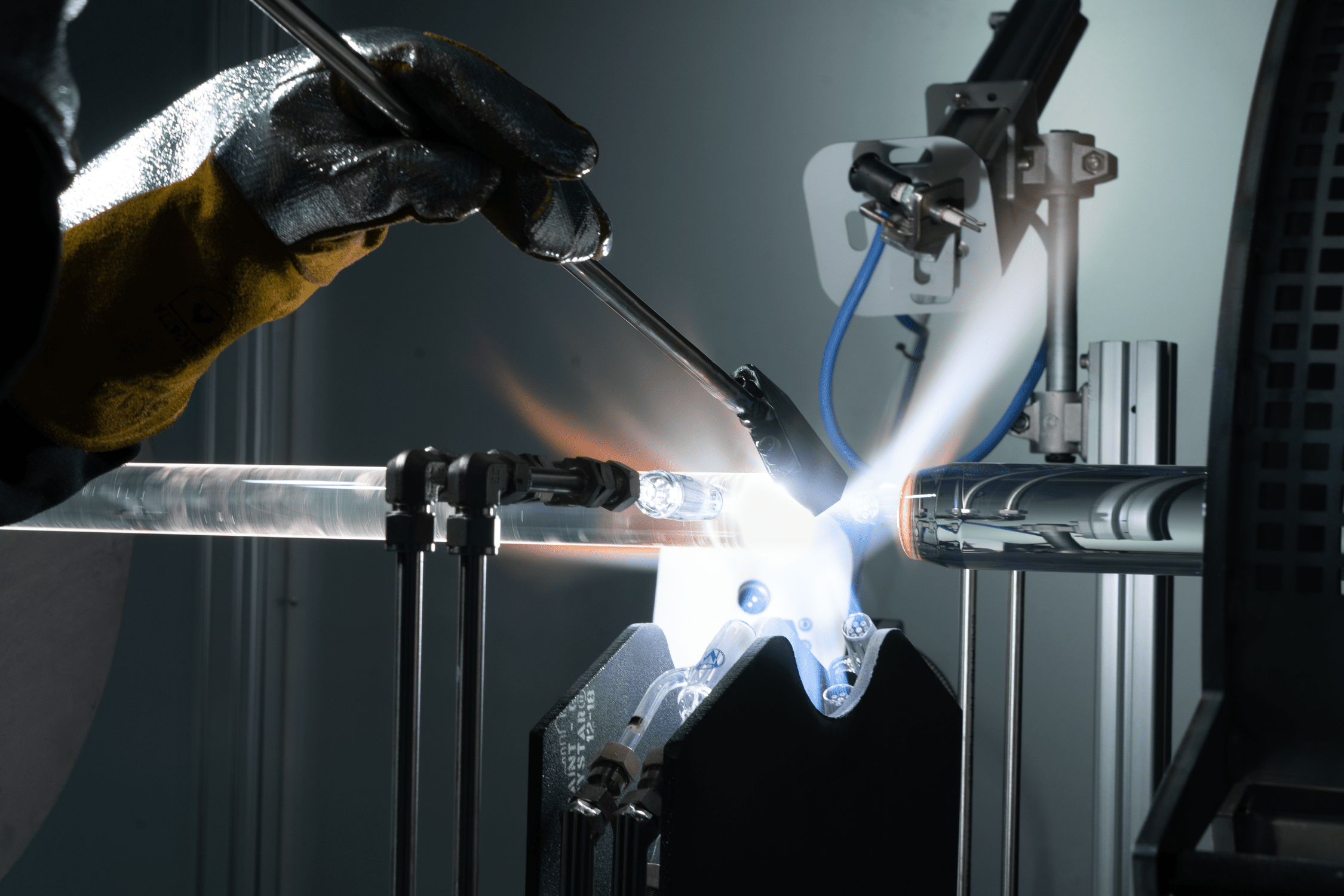
Nextrom OFC 15 glass working lathe

Manufacturing technologies for AI-era datacom cables

maximize fiber density

for compact, high-fiber-count datacom and DCI cable designs

control every layer

from preform and fiber draw to fiber identification, ribboning, bundling and jacketing

scalable production

for reliable high-volume datacom cable manufacturing

Advanced fiber technologies for future datacom networks

Hollow-core fiber production

Future datacom and DCI networks may require more than conventional fiber types. Hollow-core fiber is emerging as an important technology direction for improving latency, optical performance and high-speed data transmission in future data center interconnect applications. Multi-core fiber is another emerging path for increasing capacity density by placing multiple optical cores inside one fiber.

Hollow-core fiber transmits light through air or vacuum instead of a solid glass core. This creates potential benefits for latency-sensitive and high-performance optical networks, including data center interconnect applications.

Manufacturing hollow-core fibers requires advanced glass working and high precision across the preform and draw process. Clean, geometrically accurate preform structures help preserve the fiber geometry during drawing, while furnace temperature uniformity, draw tension, internal pressure control and low-tension handling are critical for maintaining the fiber structure and optical performance required for future datacom and DCI applications.

Nextrom OFC 15 glass working lathe

glass working lathe

Advanced glass working is essential for hollow-core fiber production.

hollow core fiber draw video

You must accept marketing-cookies to play this video or watch it on YouTube.

optical fiber identification

multicolor ringmarking

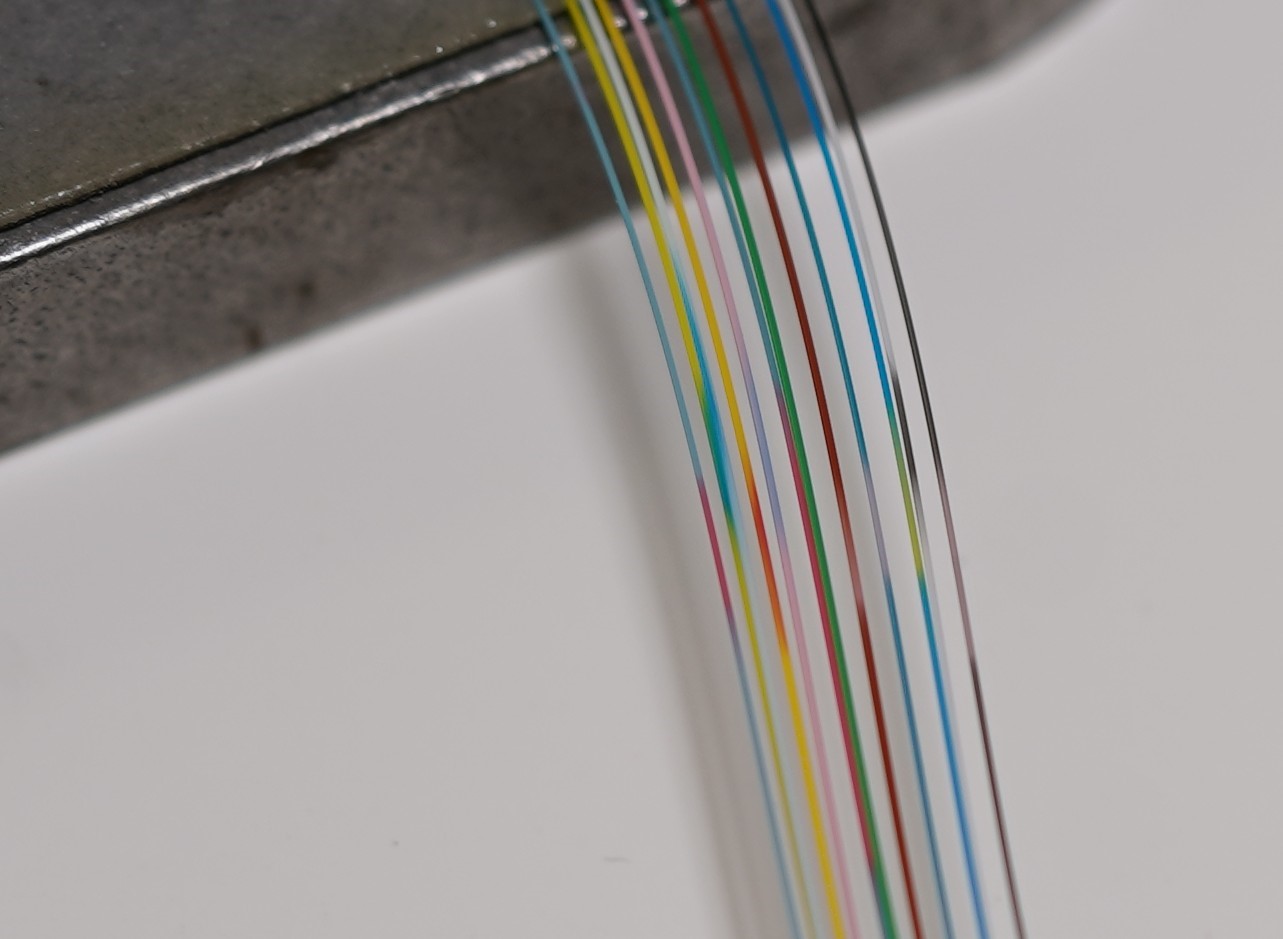
As fiber counts increase, reliable identification becomes critical for high-density datacom and DCI cables. Conventional ring marking is typically limited to around 36 fiber ID combinations, and each added ring can increase attenuation impact.

MCM multicolor marking integrates identification directly within the fiber coating layer, enabling 80+ unique fiber IDs while reducing attenuation increase by up to 95% compared with conventional ring marking. It also supports high-speed production above 1,600 m/min for scalable datacom cable manufacturing

video - MCM multicolor ringmarking

You must accept marketing-cookies to play this video or watch it on YouTube.
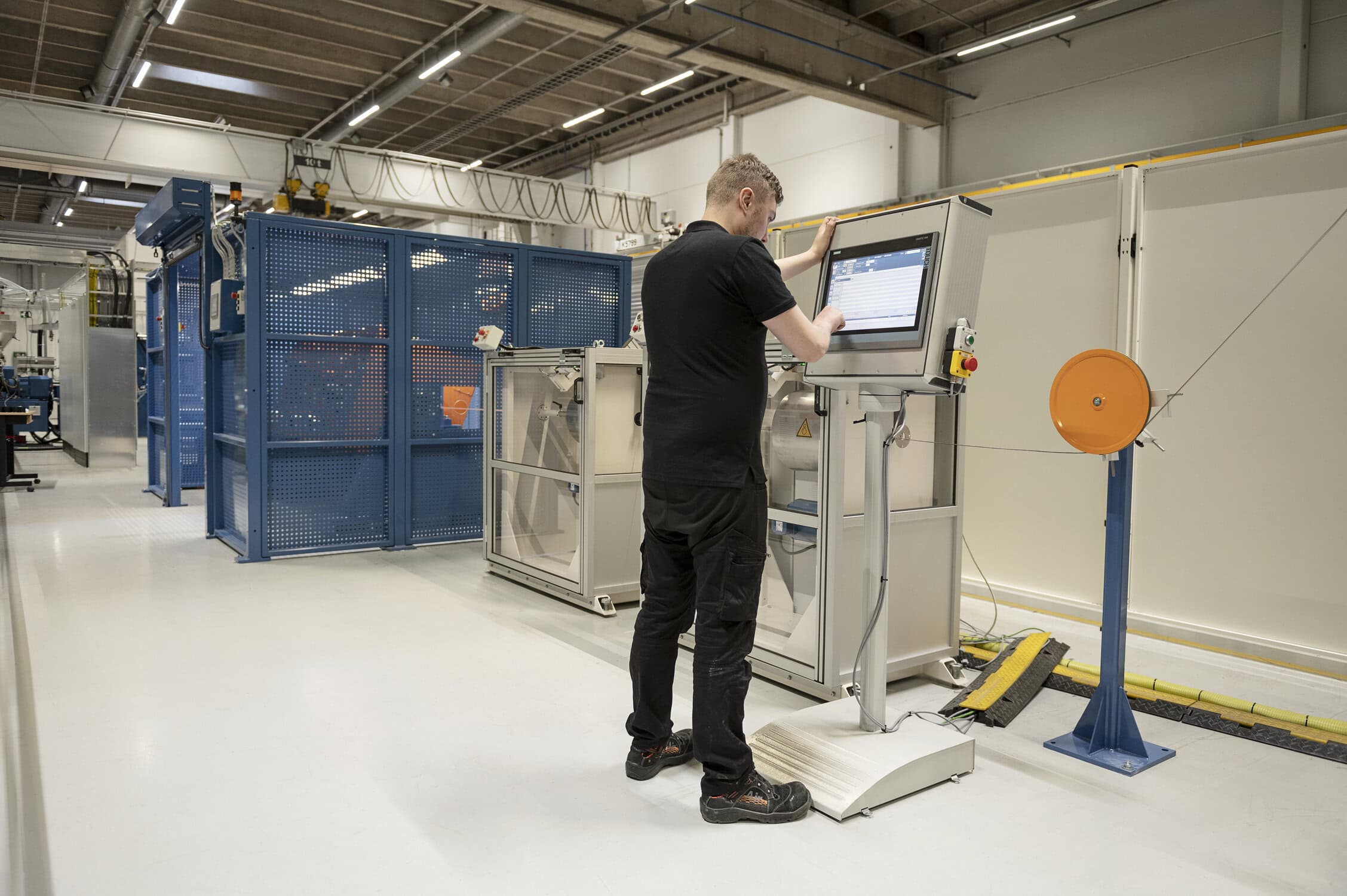
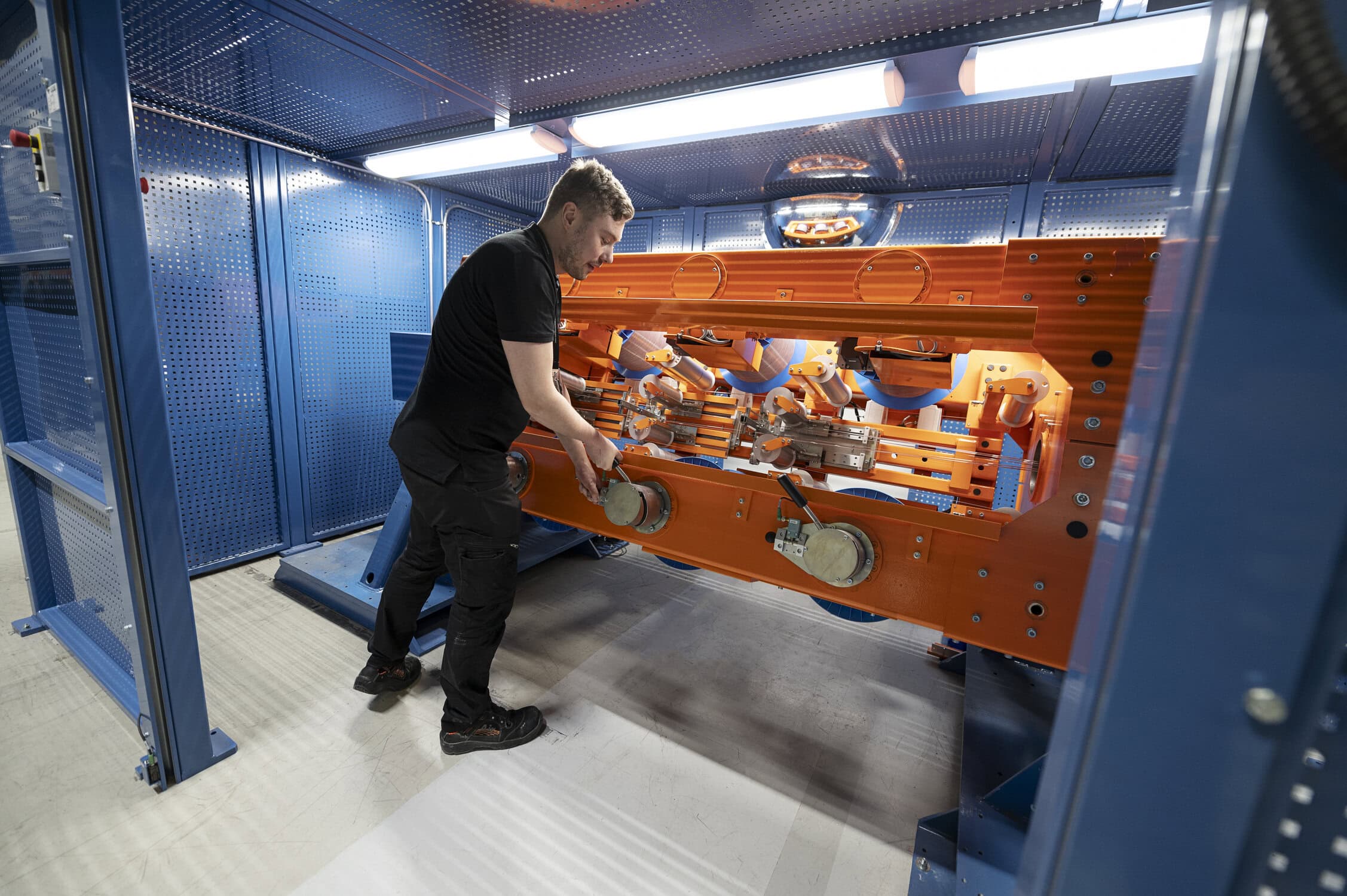
OFC 23 rollable ribbon line with operator

rollable ribbon

rollable ribbon manufacturing

Rollable ribbons help increase fiber density while keeping fibers organized, flexible and manageable in high-fiber-count datacom and DCI cable designs. By using intermittent bonding, fibers can be formed into compact ribbon structures that support efficient downstream bundling, super-bundling and final cable production.

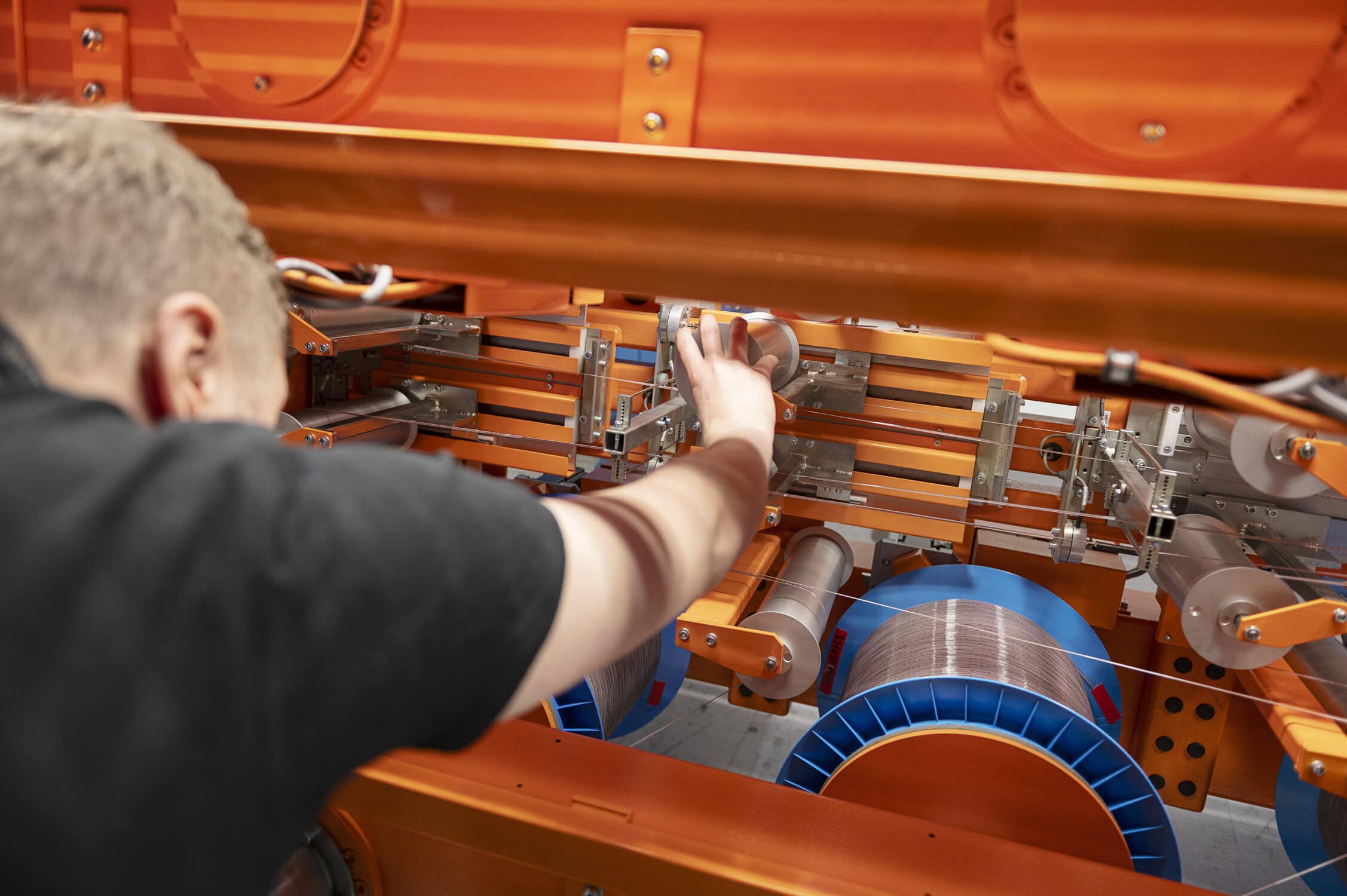
The OFC 23 rollable ribbon line supports precise bonding control, stable fiber tension, online pattern inspection, flexible pattern generation and dual take-up for scalable production of next-generation high-density datacom cables

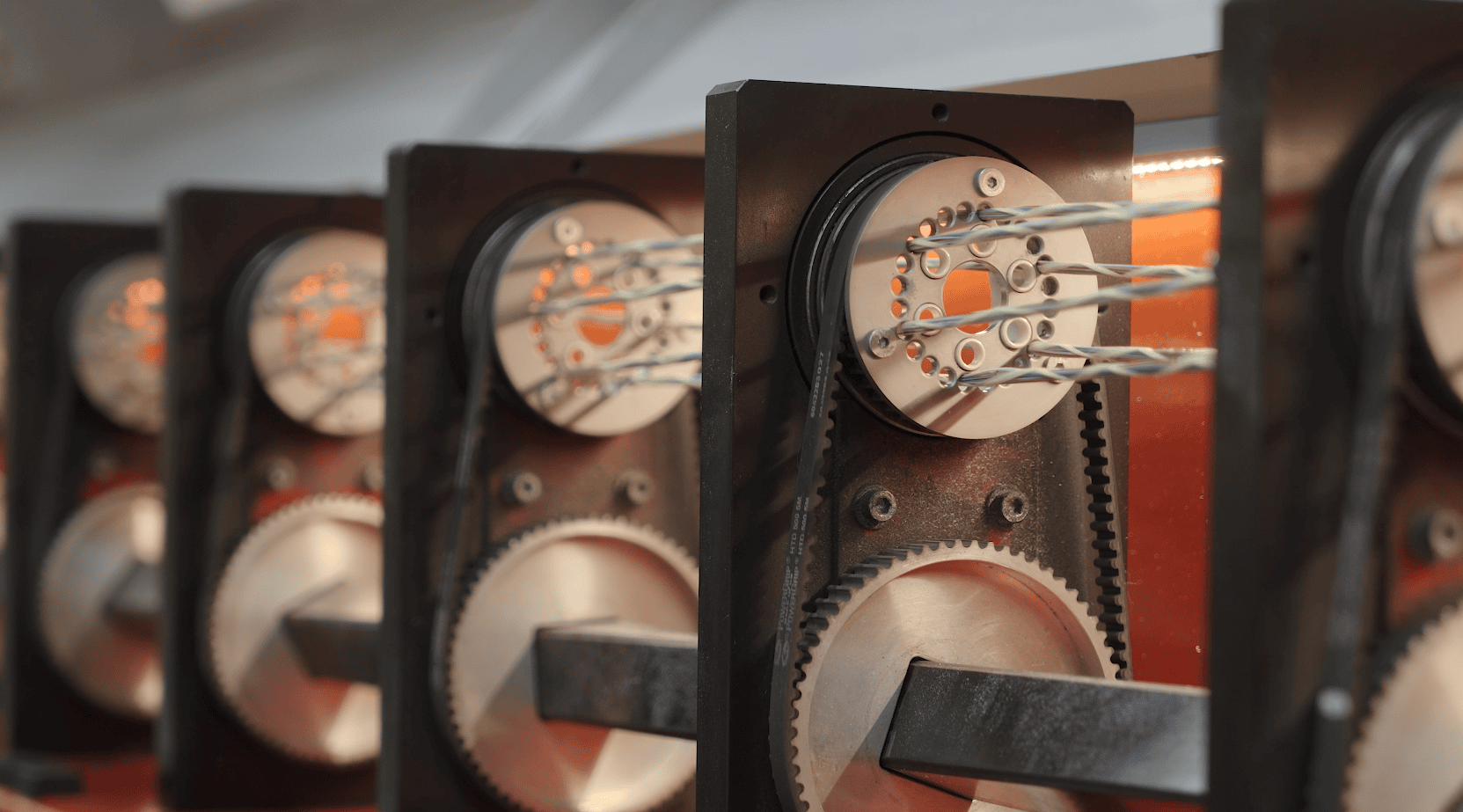
A high-precision industrial machine component at Rosendahl Nextrom, showcasing advanced manufacturing technology for cable and wire production.

flexible pattern generation

Enables precise bonding patterns for consistent, high-quality rollable ribbons

video - OFC 23 rollable ribbon

You must accept marketing-cookies to play this video or watch it on YouTube.

rollable ribbon bundling

rollable ribbon bundling for datacom cables.

High-fiber-count bundle capability

The line supports up to 36 ribbon reel positions, making it suitable for compact, high-fiber-count bundle designs. The ribbon cable manufacturing material also shows OFC 79 bundling examples with up to 288 fibers per bundle and up to 864 fibers per bundle, depending on ribbon and bundle construction.

Ready for DCI cable production

After OFC 79 bundling, the next process step can be direct jacketing with OFC 60 or combining several bundles through OFC 70 SZ-stranding / SZ super-bundling before final jacketing. This makes OFC 79 a key link in the high-density cable chain from rollable ribbon production to finished datacenter interconnect cables.

Compact bundling for high-density cable production

with helical bundling, zero-tension binding and bundle identification for datacom and DCI cables

video - OFC 79 rollable ribbon bundling line

You must accept marketing-cookies to play this video or watch it on YouTube.

SZ super-bundling for high-density datacom cables

OFC 70 can also be configured for SZ super-bundling of rollable ribbon bundles. This process combines rollable ribbon bundles into structured super bundles for ultra-high-fiber-count datacom and datacenter interconnect cable designs. The controlled stranding process helps create a balanced, well-organized cable structure for reliable high-capacity connections.

OFC SZ super bundling datacom cables

Jacketing of super bundles for datacom cables

As datacenter architectures scale and bandwidth demand continues to grow, cable designs must carry extremely high fiber counts without increasing cable size. Modern high-density fiber optic cables can contain up to 13,824 optical fibers within a cable diameter of under 40 mm, depending on the cable construction.

This level of density is engineered step by step: fibers are first organized into rollable ribbons, grouped into cable-ready bundles, combined into super bundles through SZ super-bundling, and finally protected with a robust outer jacket. The jacketing process is the final step that transforms the stranded super-bundle core into a finished datacenter interconnect cable.

OFC 60 Jacketing Line supports this final stage by applying the protective outer sheath with controlled extrusion, stable cable handling, and flexible line configuration. The result is a mechanically robust, structurally stable, ultra-high-fiber-count cable designed for demanding datacenter interconnect and high-capacity network applications.

OFC 60 Jacketing of super bundles

OFC 43 premises cable line video

You must accept marketing-cookies to play this video or watch it on YouTube.

AI connectivity challenges also appear inside the data center. Scale-up and scale-out architectures increase the demand for compact, flexible and easy-to-route indoor fiber cables.

The OFC 43 premises cable extrusion line supports the production of indoor fiber optic cables for data center scale-up and scale-out connectivity. As AI clusters increase fiber demand inside the data center, cable manufacturers need compact, flexible and easy-to-route cable constructions that balance fiber density, bend performance, handling and installation efficiency.

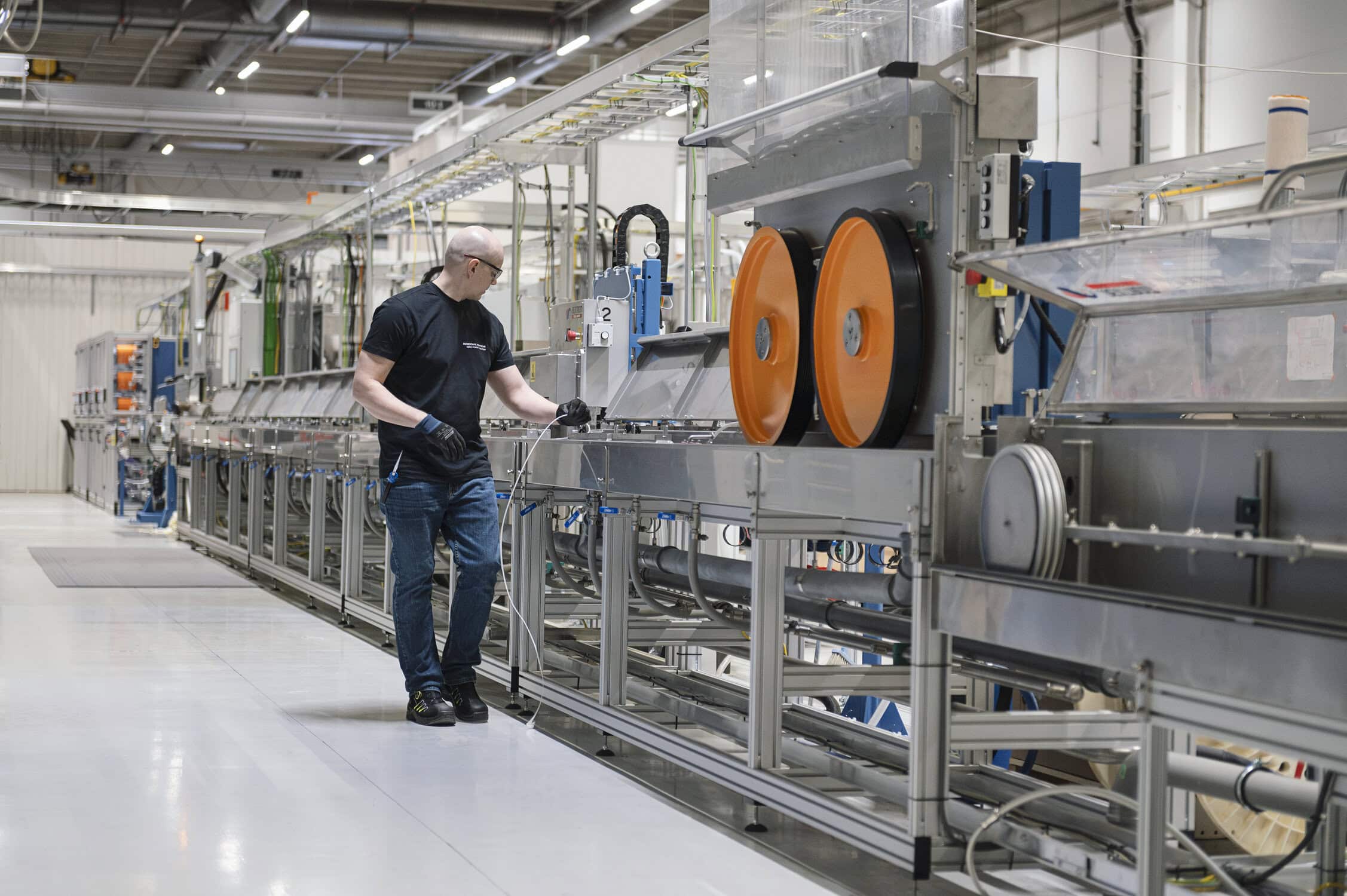
The line applies protective jacketing to optical fibers  transforming them into finished premises and data center cables. It supports a wide range of cable constructions, including simplex, duplex, distribution, breakout, drop cables.

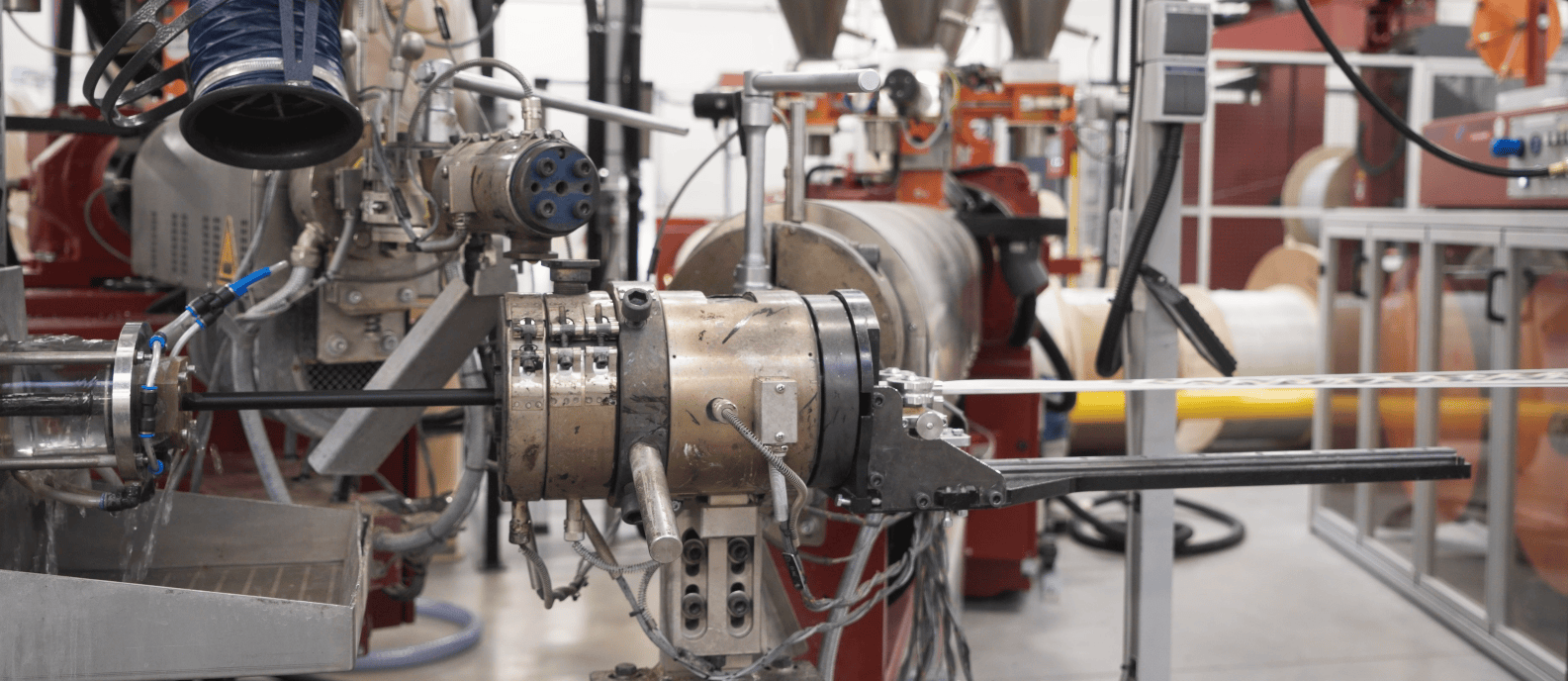
OFC 40 Secondary Coating line for loose tube production

contact

get in
touch
with us

Rosendahl Nextrom is a global leader in battery, cable & wire and optical fiber production technologies whose goal is to connect your needs with our technology. Quality, customization, product know-how and close cooperation with our partners are our core values.
here for you

Any questions?
Get in touch with us.

here for you

Sales

learn more

Service

learn more

Locations

learn more

Press

learn more

HR

learn more