advancing automation in lead-acid battery assembly
May 18th, 2026
BM-Rosendahl is advancing automation in lead-acid battery assembly. The automation concept is designed to be flexible, scalable, and expandable, allowing manufacturers to increase the level of automation step by step according to their production needs, available space, and investment strategy.
share
new at BM-Rosendahl
From production challenge to proven automation concept
in lead pasted plate handling
Automation as a modular toolbox
Our approach to automation is based on flexibility and partnership. Rather than forcing a one-size-fits-all solution, we provide a modular automation toolbox that allows manufacturers to start at the level that makes sense for their operation and expand step by step over time.
By combining scalable automation concepts with a clear focus on operator relief, process stability, and manufacturer-specific requirements, our automatic plate loading solutions support sustainable production development in automotive battery manufacturing.
In automotive battery manufacturing, every plate matters.
Each stack must arrive at the enveloping machine perfectly prepared and on time. Shift after shift, day after day.
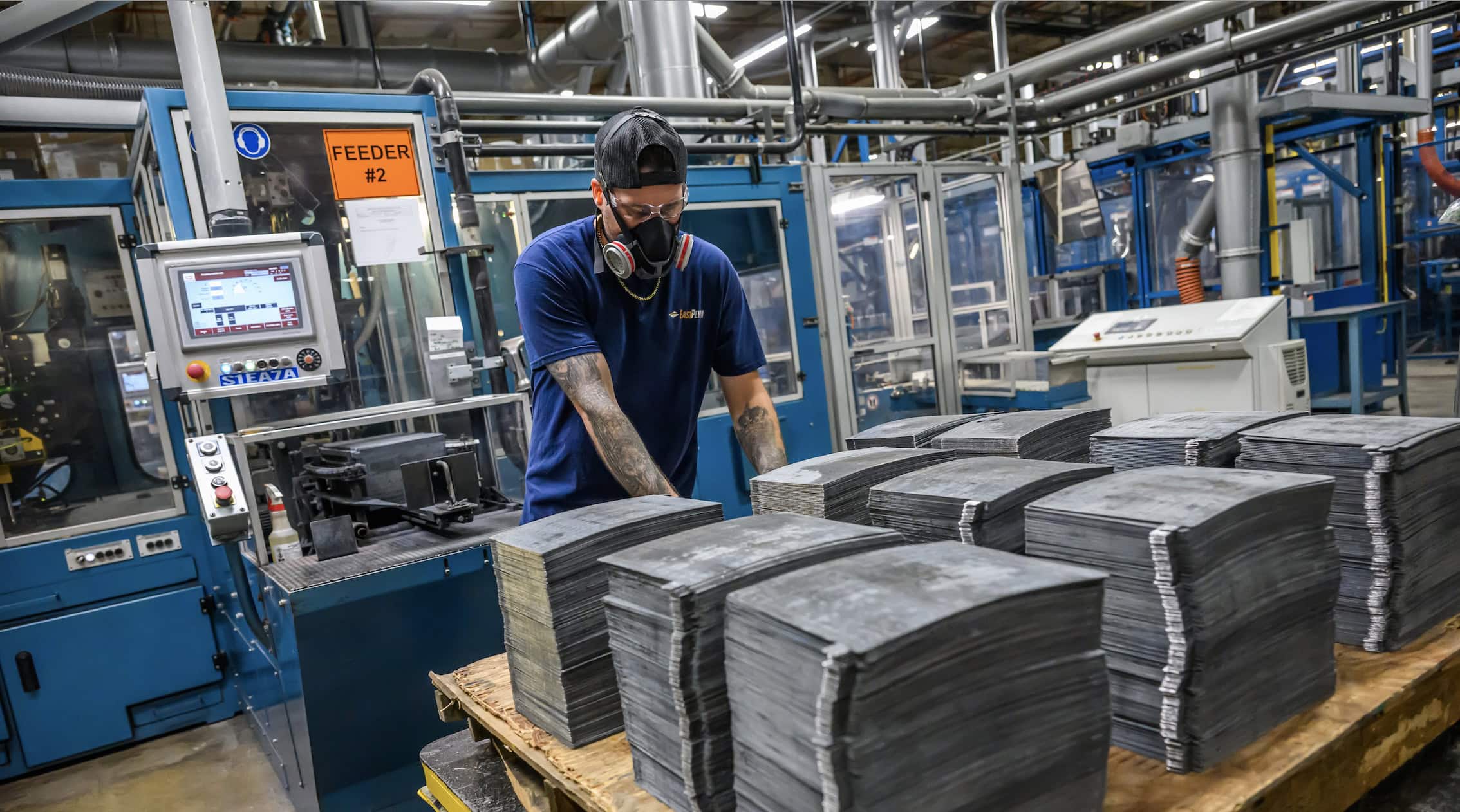
As production volumes increase, manual or semi-automated plate stack loading quickly becomes a bottleneck. Beyond throughput and consistent quality, these tasks place a significant physical burden on operators, including heavy lifting and continuous exposure to lead dust. To us it became clear: automatic loading solutions are no longer a luxury. They are becoming an industry standard.
BM-Rosendahl’s scalable automation concept
Working closely with our customers, we saw a common need across the industry: improving working conditions and operator relief, while ensuring safety, process stability, and higher throughput.
Our response was not a single machine, but a reliable and scalable automation system tailored to real-world production environments and practical requirements.
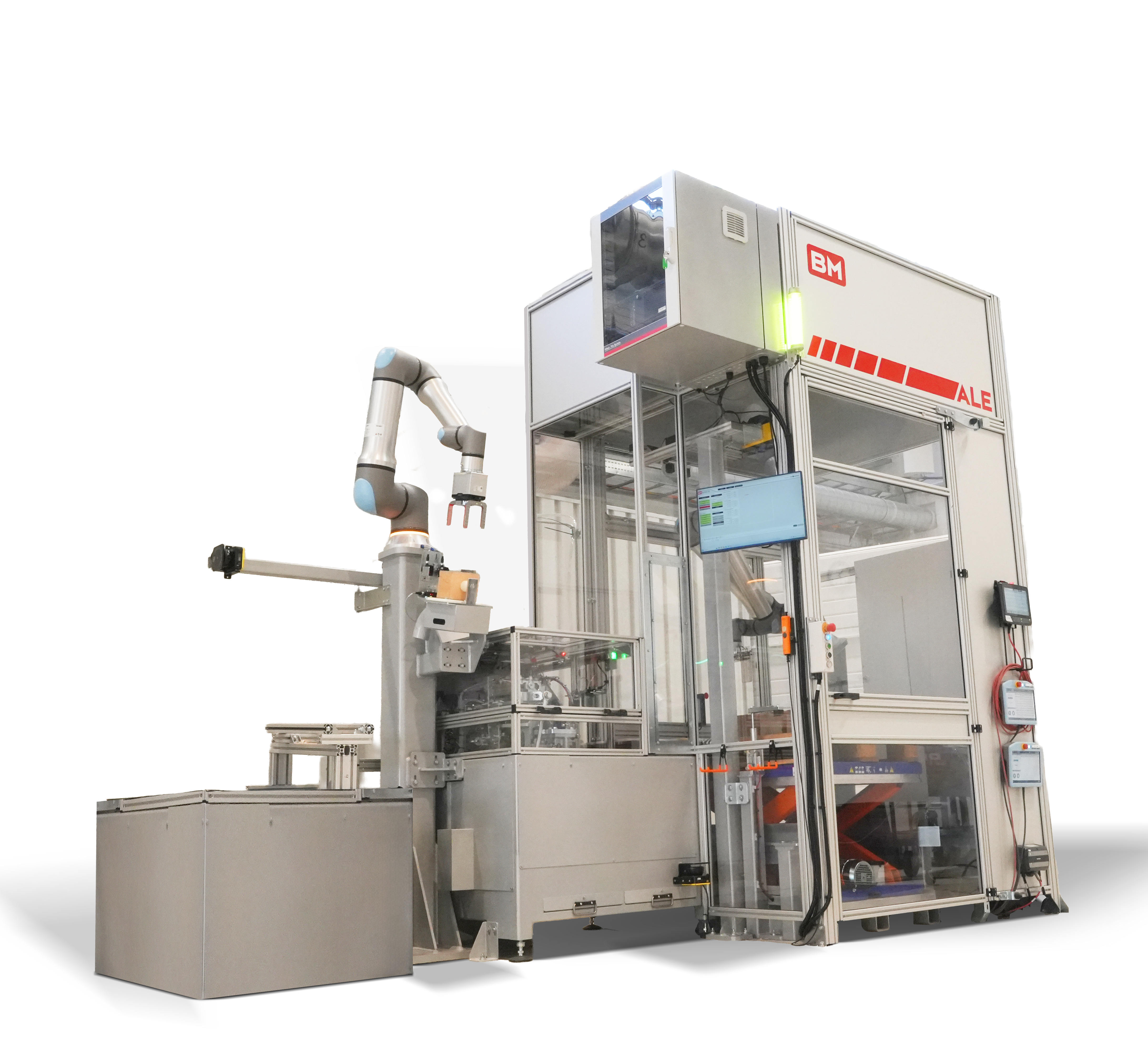
At the heart of this solution is a fully integrated automatic plate loading system that manages the entire path from rack to enveloping machine. Each step is engineered for precision, repeatability, and reliability.
the automation concept
Based on this integrated approach, the automation concept is structured into clearly defined functional modules.
Together, these modules form a flexible and modular toolbox, allowing the selection and combination of the most suitable solution for each customer’s specific production environment and requirements. The automation concept includes the following functional segments:
pallet handling system
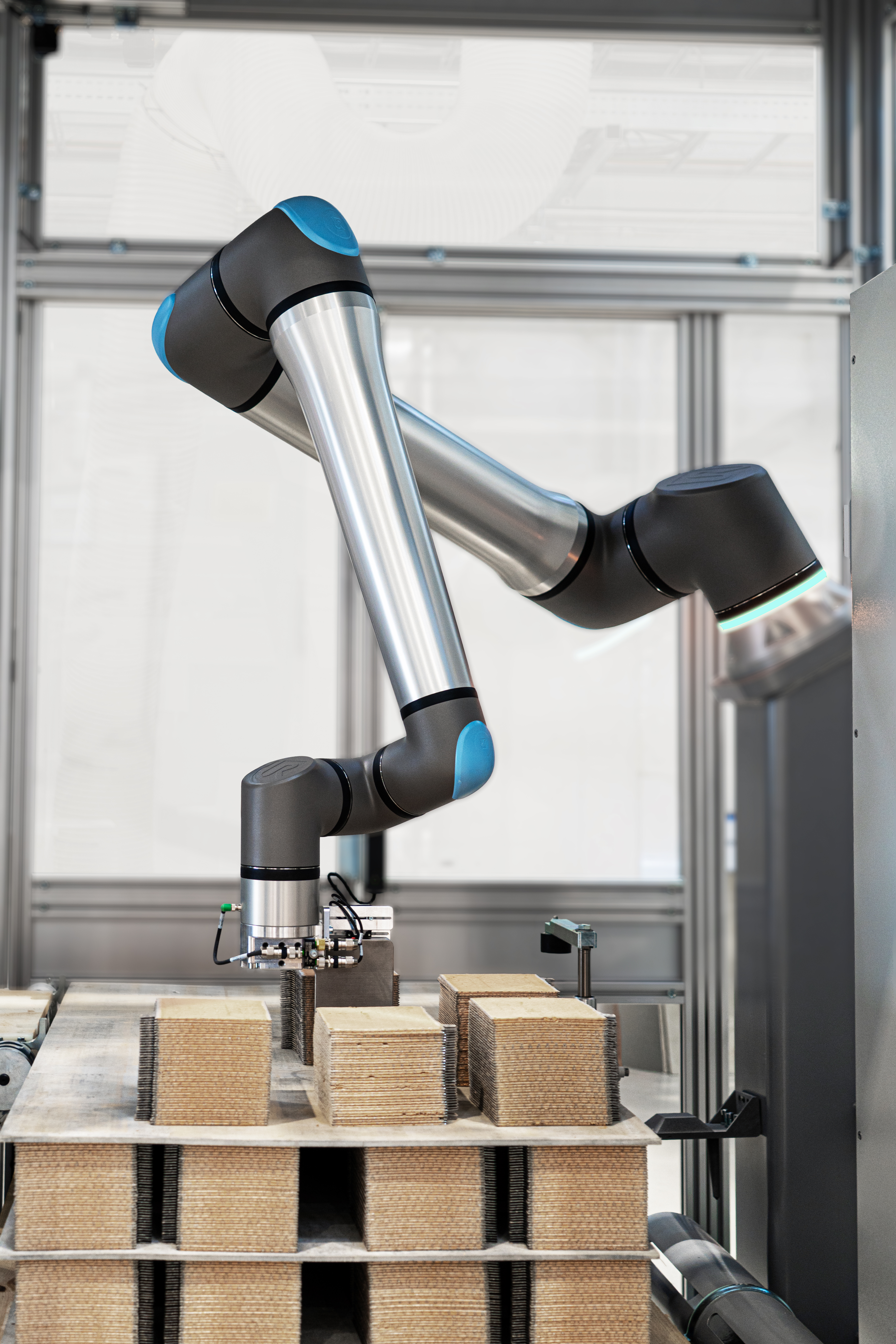
The pallet handling system can be configured from a single pallet loading station up to a fully automated pallet exchange system with integrated buffering. The level of automation is adapted to the available space, production volume, and customer-specific requirements.
pallet stack
handling
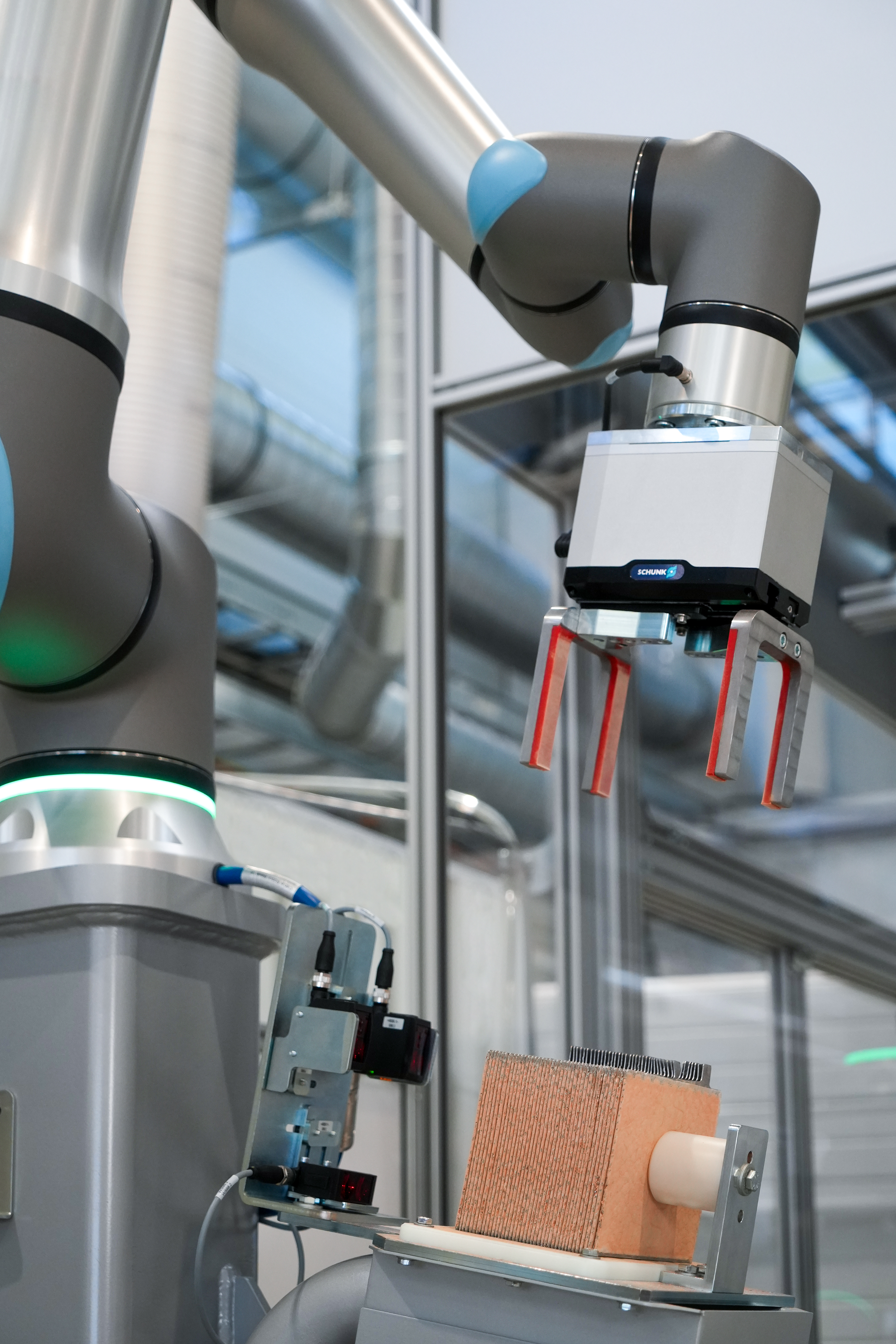
Solutions for existing rack systems can be realized. Depending on the application, pallet stack handling is performed by gripping or shifting the stacks using different robotic systems. A 3D vision system combined with BM Intelligent Path Finding software ensures reliable stack detection, orientation, and collision-free motion, even under varying rack and stack conditions.
Stack breaker and preparation
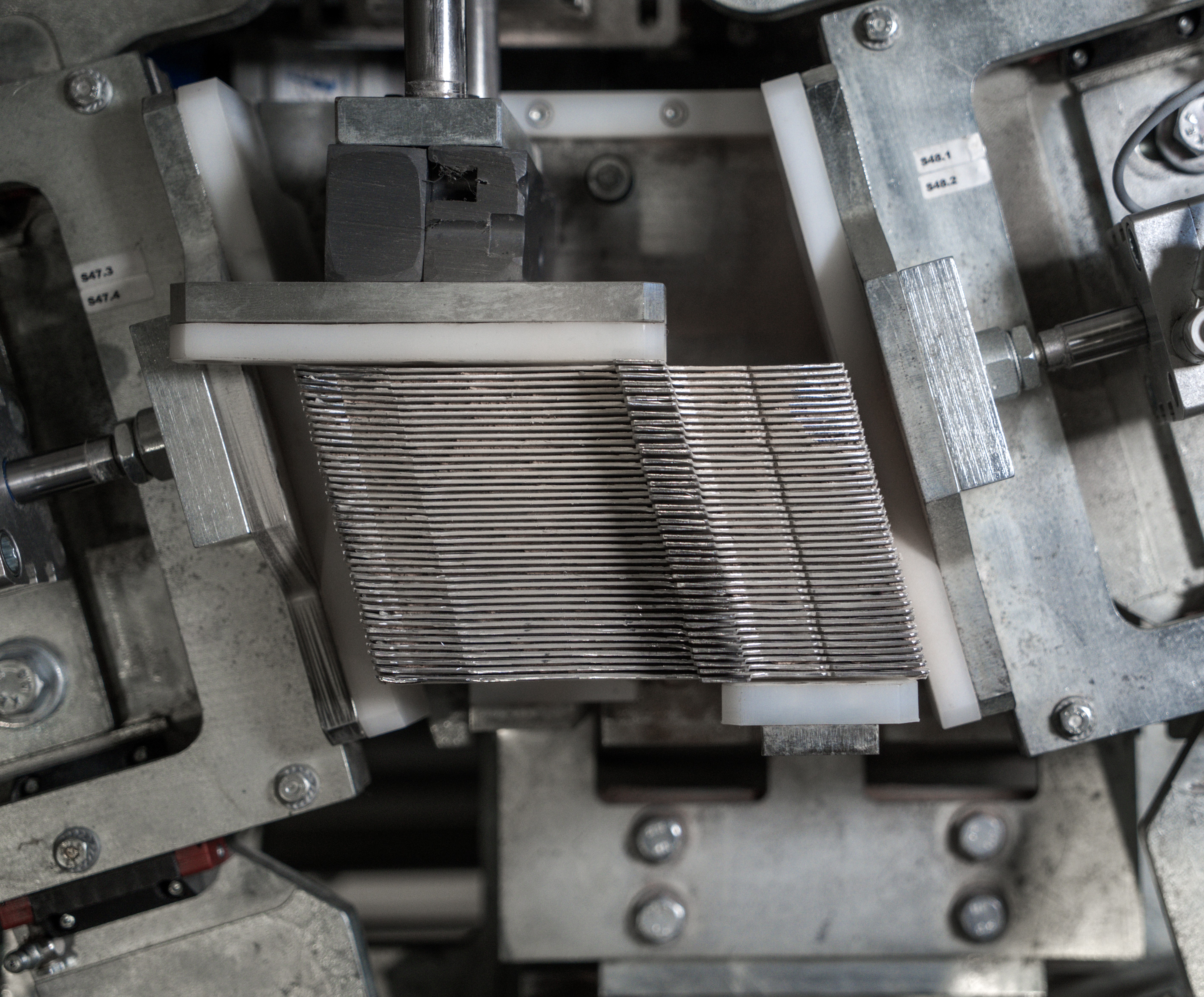
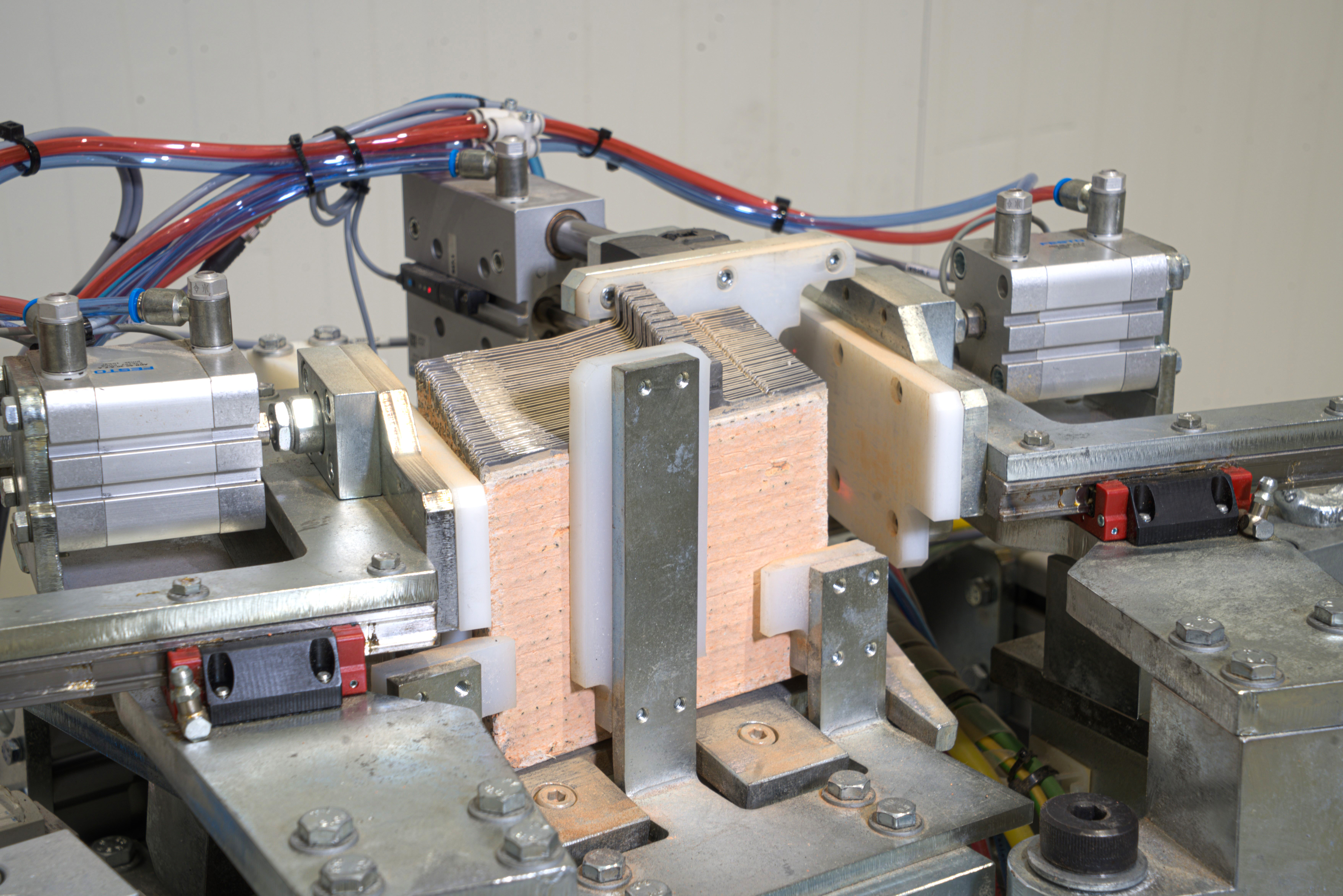
In this stage, incoming stacks are prepared for the enveloping machine. If required, dedicated modules allow adjustment of the stack height, including both reduction and increase of the number of plates per stack, to ensure consistent downstream processing.
ALE Automatic Loading Enveloper
Customer-specific loading concepts are developed jointly and adapted to the on-site conditions. Flexible gantry and robotic solutions allow the selection of the optimal loading concept based on the available space, line layout, and production requirements.
how to get started
Automation does not have to start with a fully automated solution from day one.
The automation concept is designed to be flexible, scalable, and expandable, allowing manufacturers to increase the level of automation step by step according to their production needs, available space, and investment strategy.
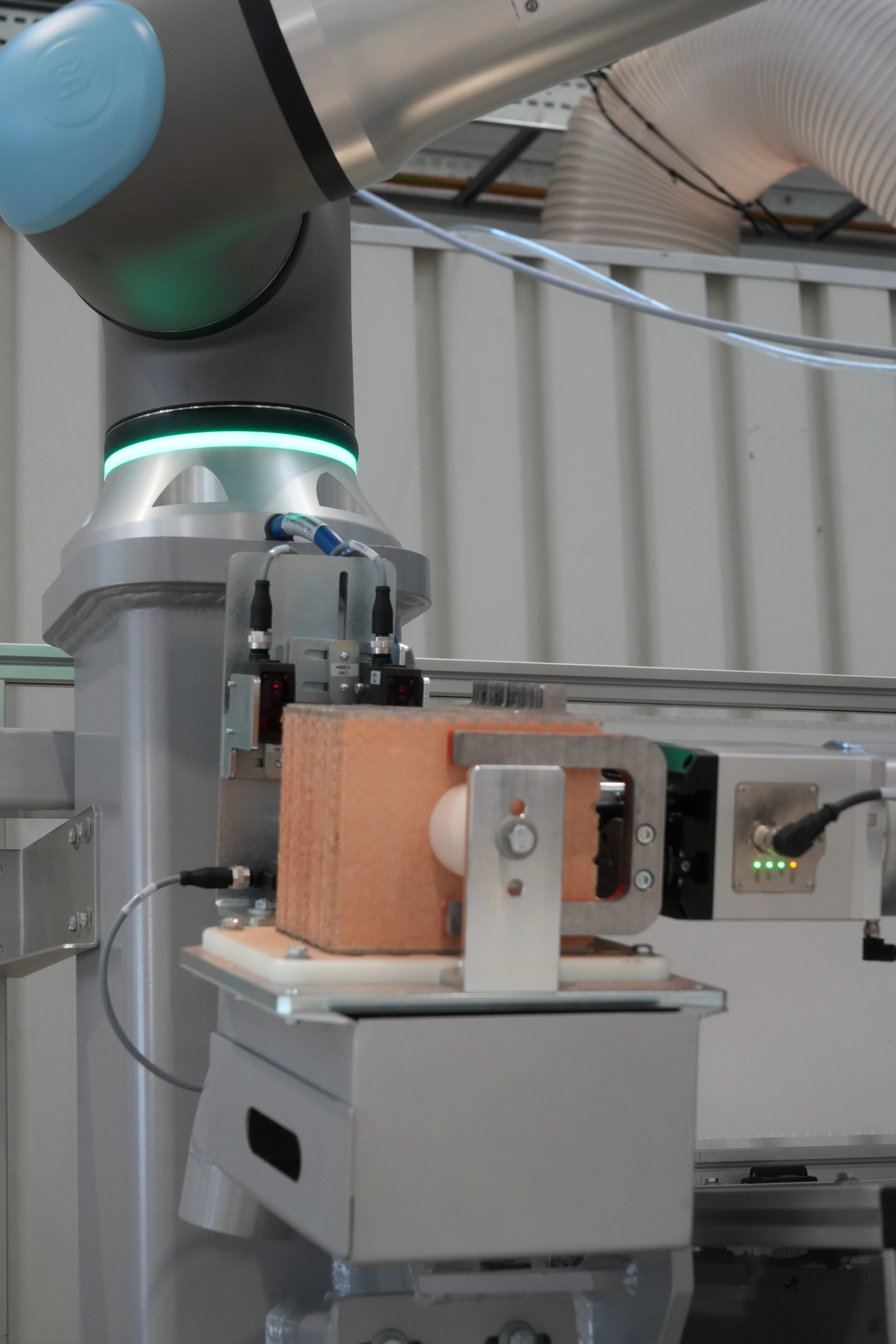
A typical best practice example is the automation of stack preparation as an initial step. By introducing automated stack breaking and preparation, operators are relieved from heavy lead-dust, as well as from physically demanding tasks.
In this setup, instead of lifting and continuous manual manipulation, the plate stacks are slided into the stack breaker by the operator. The shuffling and alignment is done automatically.
The stack breaker solution can be implemented either as a fully integrated module within the machine or as a stand-alone solution, providing maximum flexibility for retrofits as well as for new production lines. In addition, pallet and plate stack handling can be integrated to enable fully automated operation.
you may also like
contact
get in
touch
with us