laser cleaning system for battery manufacturing
laser-clean surface for
reliable lithium-ion
battery manufacture
applications in lithium-ion manufacturing
inline surface cleaning for lithium-ion battery production
In high-performance battery manufacturing, even microscopic contamination can reduce battery quality, increase resistance, and lead to unstable cell performance. The BMe CLEAN laser cleaning system removes particles, oxide layers, oils, and process residues from battery components before the subsequent assembly processes.
Designed for inline integration into lithium-ion battery production lines, the system enables precise, contact-free surface preparation for copper, aluminum, and coated battery materials. The BMe CLEAN supports prismatic, cylindric and pouch cell types.
Insufficient surface preparation may lead to unstable welding processes, poor energy coupling, increased spatter, and inconsistent weld quality.Â
René Wund, R&D
why laser cleaning matters in battery production
improve process reliability through cleaning before welding
Surface contamination is one of the most common causes of:
- poor weld seams
- unstable electrical connections
- increased contact resistance
- scrap and rework
- reduced battery performance
Inline laser cleaning improves process stability before:
- laser welding
- bonding
- tab joining
- busbar assembly
- adhesive dispensing
a highly controllable process
Compared to mechanical or chemical cleaning methods, laser cleaning is a dry, contactless, and highly controllable process that supports modern battery manufacturing requirements.
laser cleaning sequences
01
material feeding via conveyor belt
02
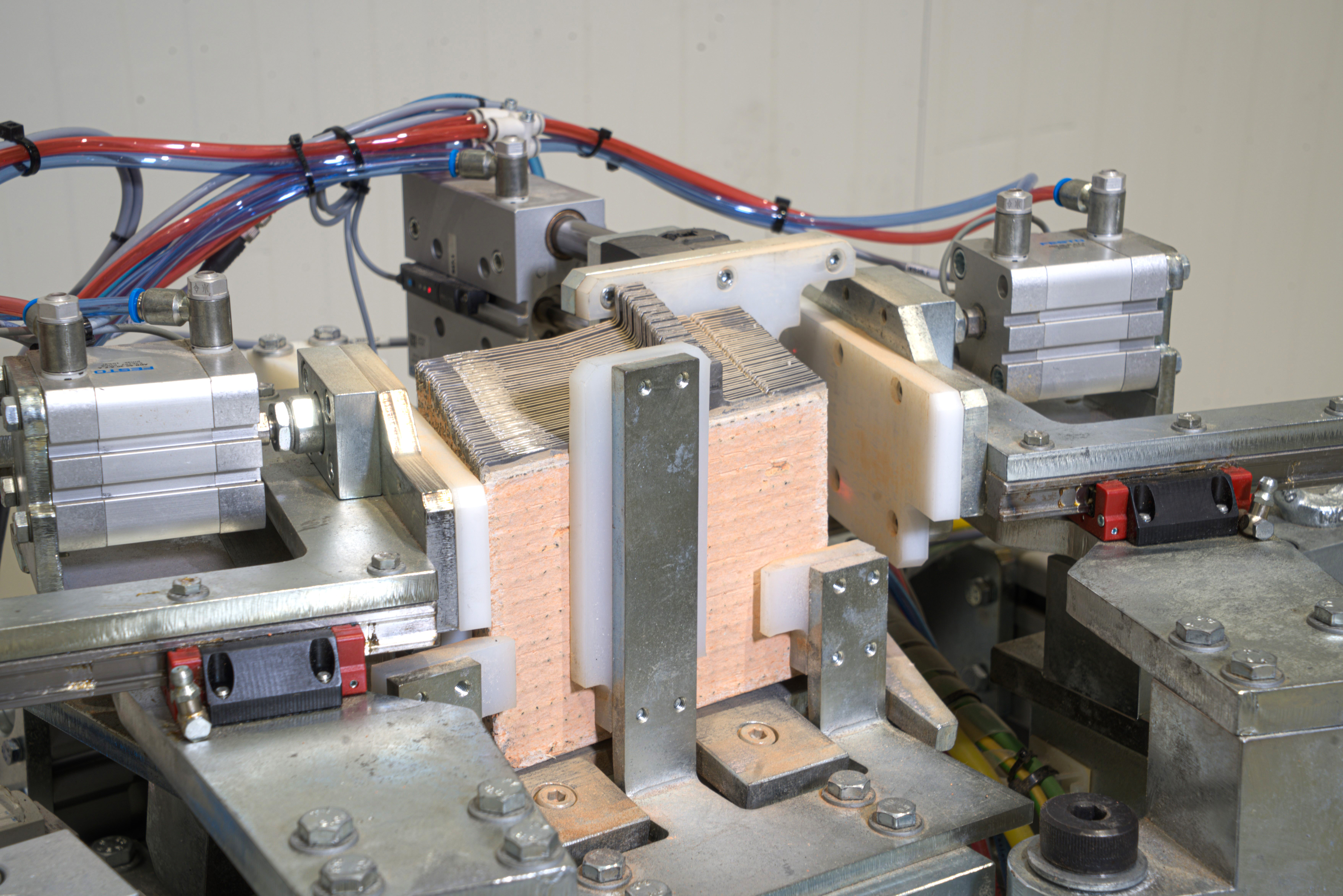
positioning and focusing using a mechanical device and camera system
03
laser cleaning of the surfaces
04
extraction of particles and vapors during the cleaning process
05
station unloading via conveyor belt
cell tab cleaning
before and after laser cleaning with BMe CLEAN
The image shows a clear comparison of battery cell poles before and after laser cleaning. This precision cleaning process removes oxidation, contamination, residue, and surface buildup from the positive (+) and negative (–) terminals by generating a homogeneous surface.
advantages of dry laser cleaning
how laser cleaning benefits your battery manufacturing
improved weld quality
Removes contamination and oxide layers before joining processes to achieve more stable electrical connections and reduced weld defects.
contact-free surface treatment
No mechanical stress on sensitive battery components.
reduced scrap rates
Supports higher process consistency and improved production yield.
Inline Integration /Stand-alone
Can be integrated into automated battery manufacturing lines and high-throughput production environments. Or can be used as stand-alone equpiment.
low maintenance
Minimal wear components and stable long-term process performance.
comparing laser cleaning...
- Dry process
- Contact-free
- Precise & selective
- Low consumables
- Easy inline integration
... to conventional cleaning
- Often requires chemicals
- Mechanical wear possible
- Lower precision
- Higher operating costs
- Â Often offline processes
BMe CLEAN technical data
BMe CLEAN laser welding parameters
| parameters | limits |
|---|---|
| cleanable materials | metals (Aluminum, Copper, nickel-plated steel) |
| possible contaminants | oxide, paint, oil, grease, rust layers, adhesive residues |
| removed layer thickness | ~ 1 – 100 μm |
| cleanable cell types | prismatic, cylindrical, pouch |
| max. product dimension ( W x D x H ) |
600 x 1,100 x 250 mm other sizes on request |
| max. product weight |
150 kg other sizes on request |
| laser power | 20 – 200 W (pulsating) depending |
| cleaning rate | 0.5 - 10 cm²/sec |
| edit field |
160x160mm, f=450mm 300 x 300mm, f = 450mm |
| positioning accurancy | ±0.04 mm |
FAQ
Here are a few frequently asked questions on
laser cleaning with BMe CLEAN
Laser cleaning is a contact-free process that removes contamination, particles, oxide layers, and residues from battery components using focused laser energy.
Surface contamination can negatively affect weld quality, conductivity, and long-term battery performance.
Yes. Laser cleaning is highly effective for removing thin oxide layers and preparing conductive materials for joining processes.Â
Yes. Inline laser cleaning systems are specifically designed for automated high-volume battery manufacturing environments.
The system can be used for cylindrical, pouch, and prismatic battery cells.
Laser cleaning eliminates chemicals and consumables while enabling highly precise and repeatable surface treatment.
contact
get in
touch
with us