battery module strapping machine for prismatic cells BMe STRAP
Precise compression and metal band strapping of prismatic lithium-ion and sodium-ion cell stacks for automated battery module assembly.
strapping (banding) with metal bands
Precise compression and metal band strapping for battery modules.
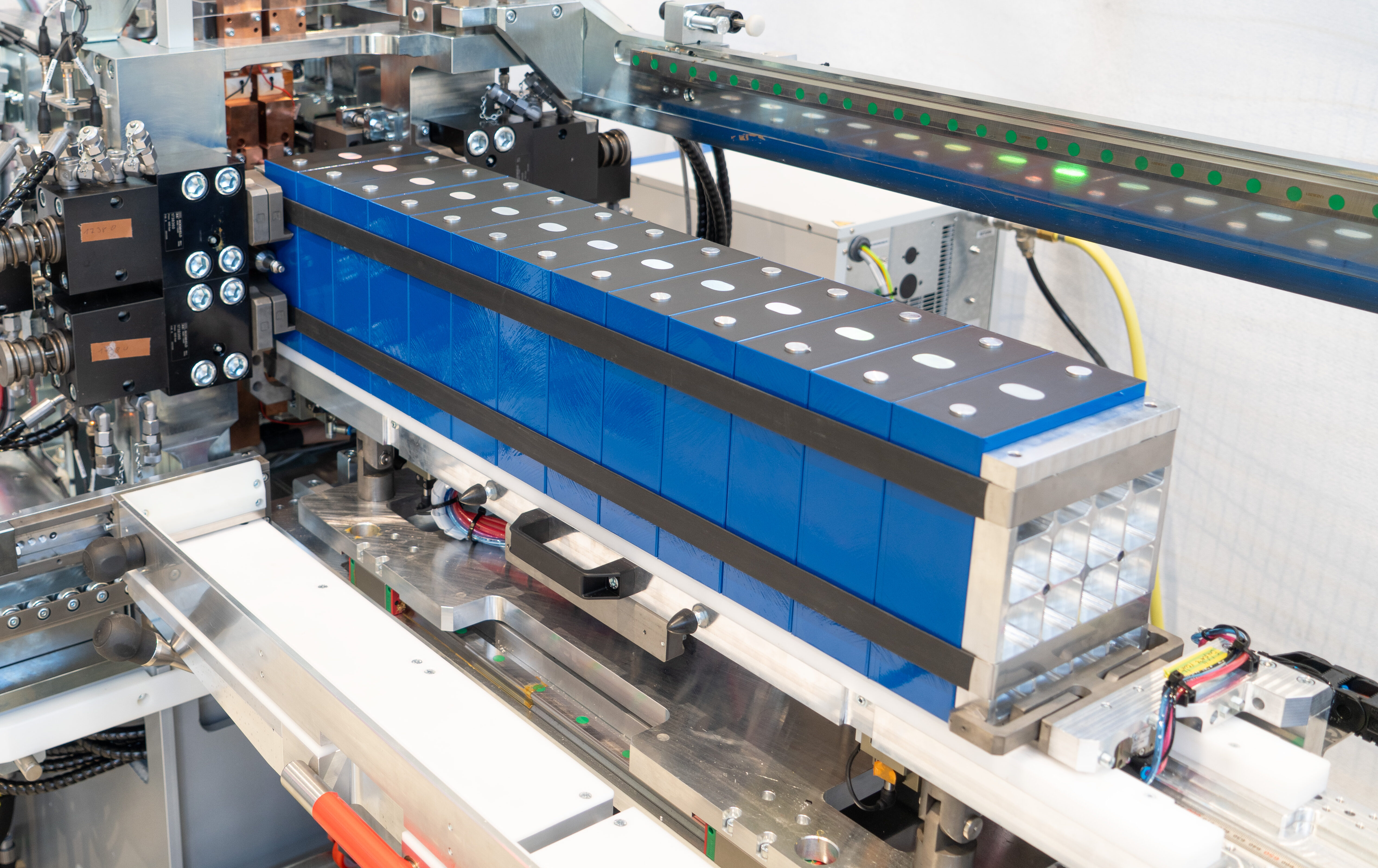
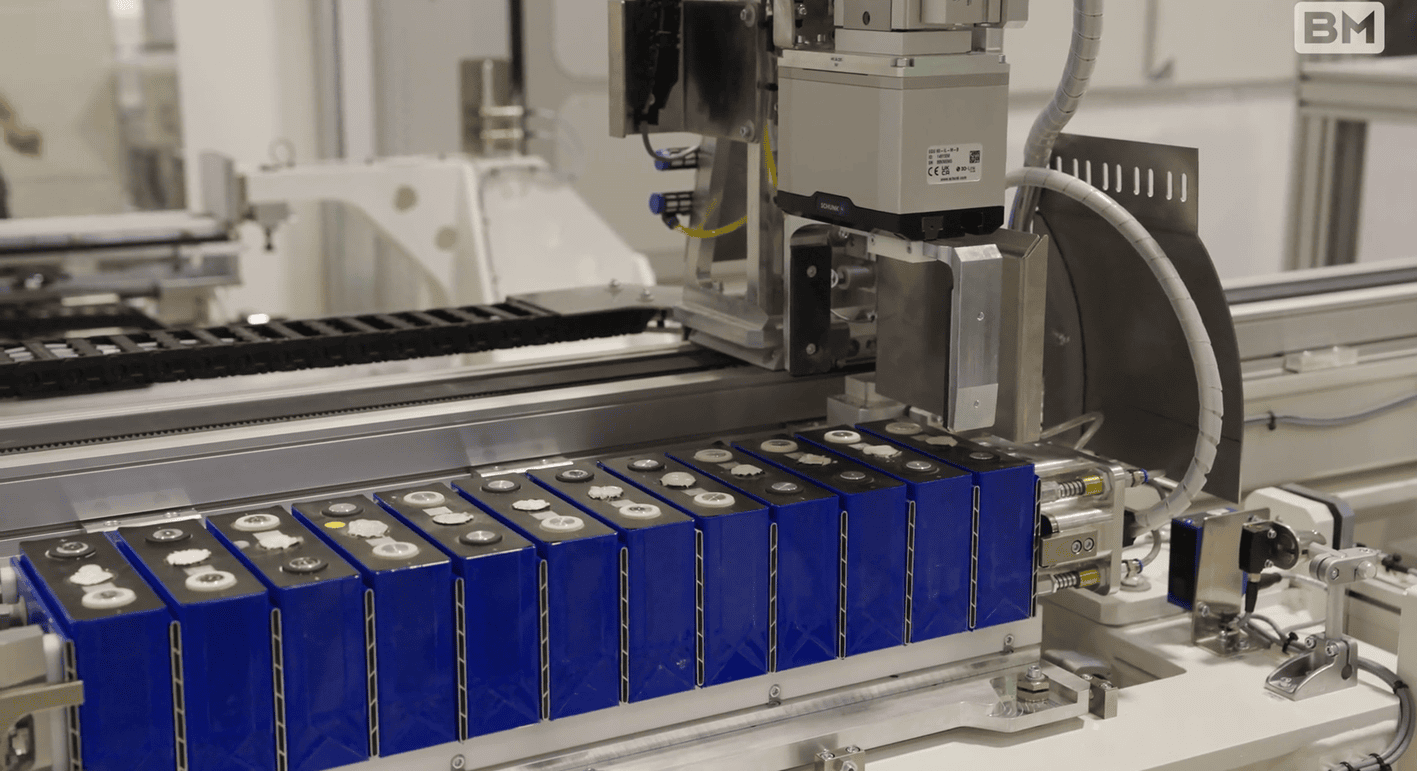
The BMe STRAP compresses prismatic lithium-ion or sodium-ion cell stacks to a defined compression force and secures the stack with stainless steel tension straps. The system compensates for cell thickness tolerances and creates stable battery modules for subsequent assembly processes.
flexible battery module strapping
The BMe STRAP is designed for both fully automated operation in assembly lines and semi-automated processes. It allows for automatic or manual product evacuation – even in the event of power loss.
Thanks to the alignment of cell terminals and its versatile design, the machine can work with loose or glued cell stacks, meeting diverse production requirements.
The BMe STRAP can either be a stand-alone station or a station being seamlessly integrated into existing production lines. With its high flexibility and precision, it supports the increasing demands for quality and reliability in battery module assembling.
steel / metal band strapping
BMe STRAP metal band strapping machine for battery modules
how battery module compression works
For prismatic cells, controlled compression is a key factor influencing lifetime, safety, and overall module performance.
During charging and discharging, lithium-ion cells undergo continuous dimensional changes caused by electrode expansion, temperature variations, and ageing effects. Over the lifetime of a battery, this swelling can become significant. Without a defined compression strategy, the resulting mechanical stress can lead to increased internal resistance, degraded thermal performance and accelerated ageing.
To manage these effects, a battery module is ideally compressed and held in this state by its frame or metal bandthroughout swelling cycles. The objective is not maximum compression, but consistent and controlled compression.
Insufficient force allows excessive cell expansion and reduces module performance. Excessive force can damage internal cell structures, create unwanted stress on the frame or strap, and negatively influence cell lifetime.
Key functions and benefits of cell compression:
- control of cell swelling
Maintains the mechanical integrity of the electrode stack and limits dimensional changes during operation - extended cycle life
Reduces mechanical fatigue and helps prevent electrode layer
degradation or delamination - enhanced safety and durability
Prevents uncontrolled deformation and improves resistance to vibration and mechanical loads
applications for the BMe STRAP
the BMe STRAP module stapping unit can be used
for a large application portfolio
battery energy storage systems
Prismatic cell modules for stationary energy storage / BESS applications.
EV battery modules
Automated module assembly for electric vehicle battery systems.
off-road and industrial battery systems
Compatible with different prismatic cell designs and module concepts
Lithium-ion and sodium-ion battery modules
Lorem ipsum dolor sit amet, consetetur sadipscing elitr, sed diam nonumy eirmod.
how battery module strapping works
01
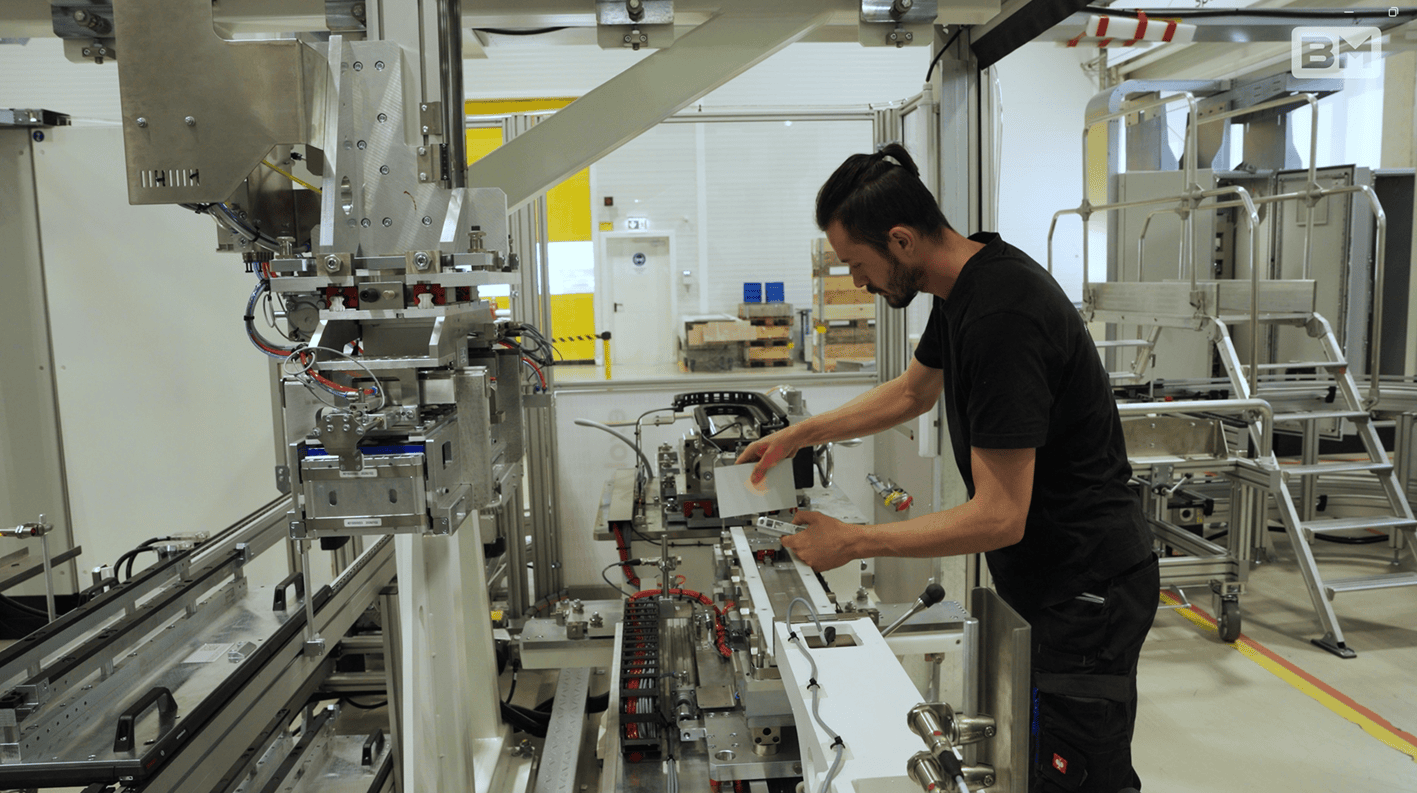
Prismatic cells are positioned/aligned
02
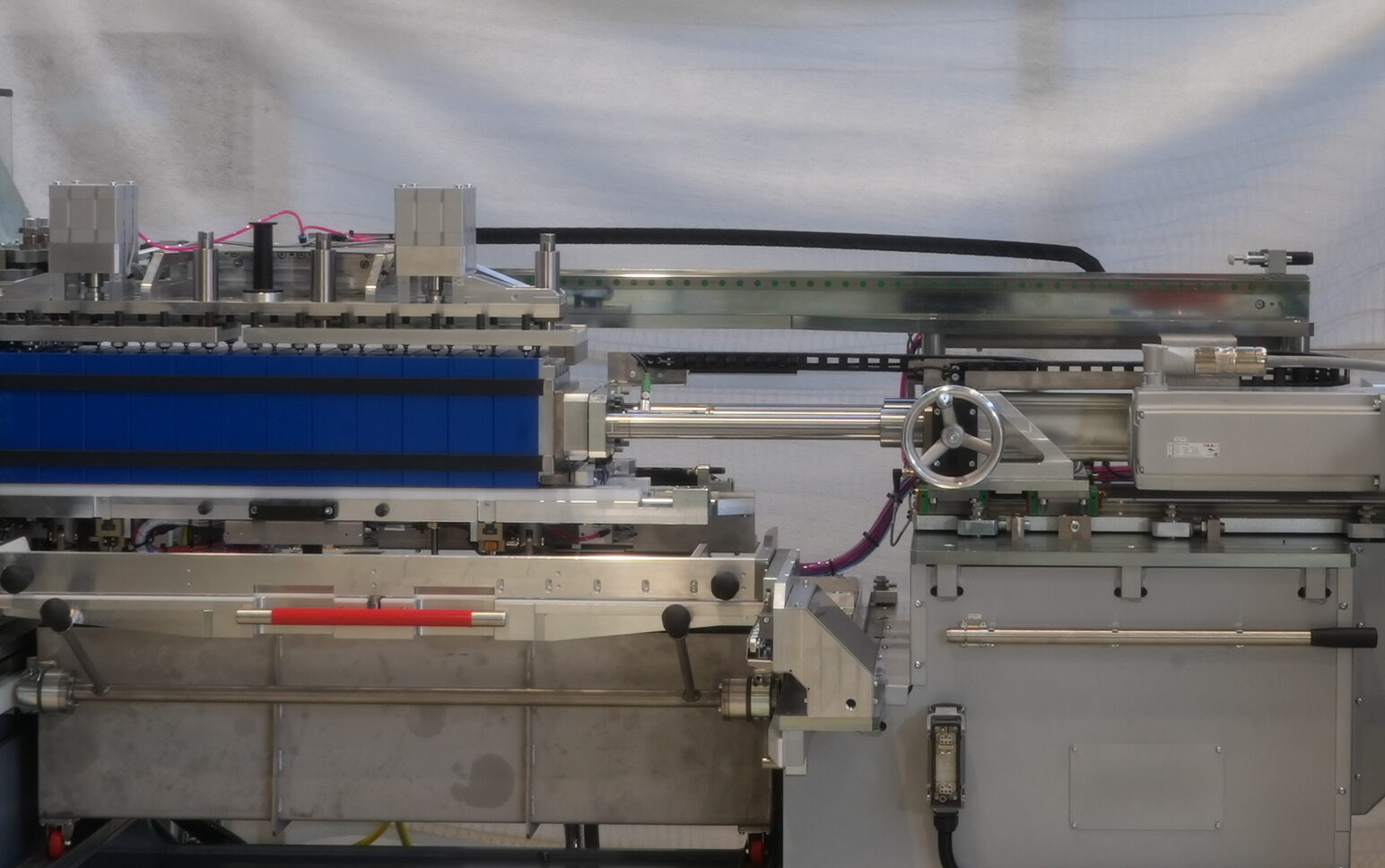
End plates are added
03
The cell stack is compressed to a defined force
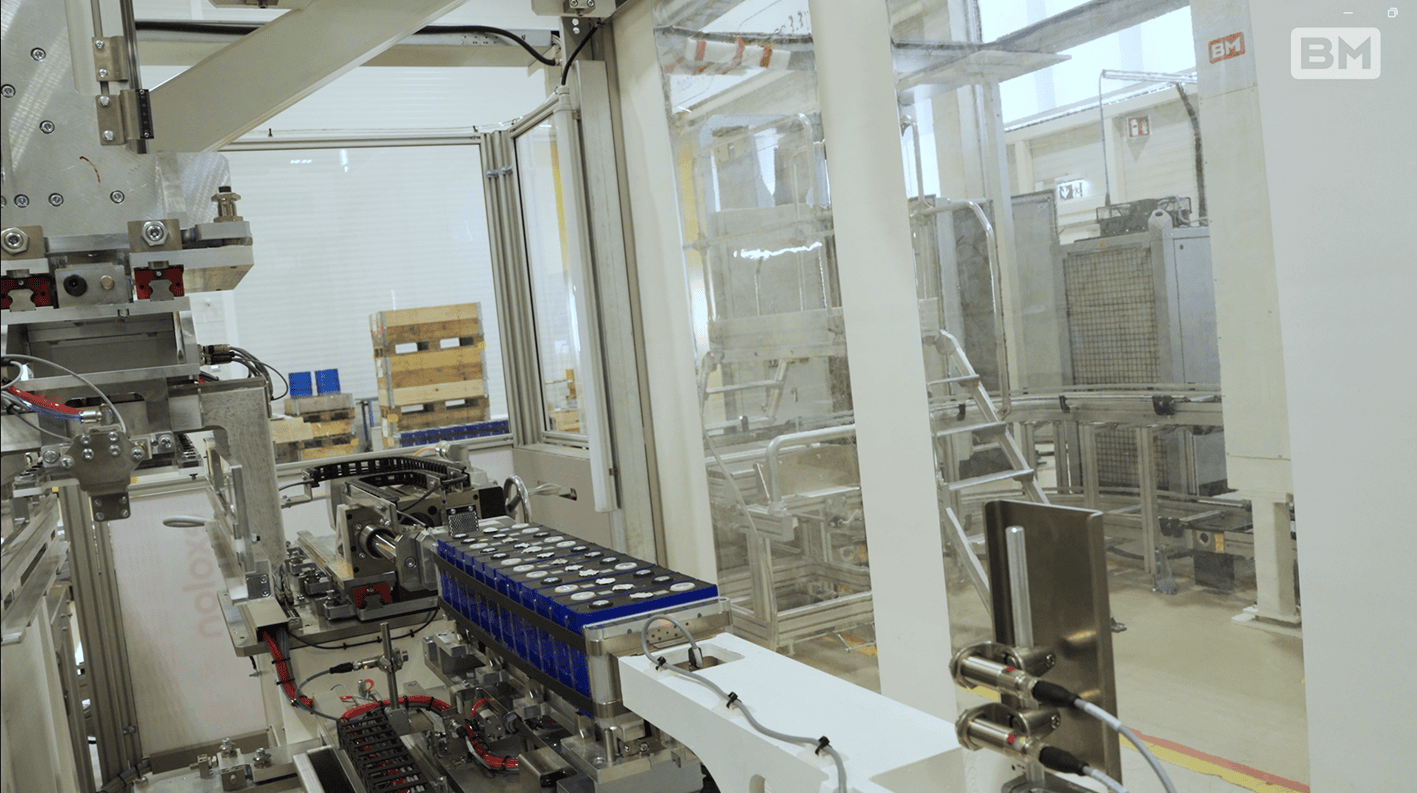
04
Cell thickness tolerances are compensated
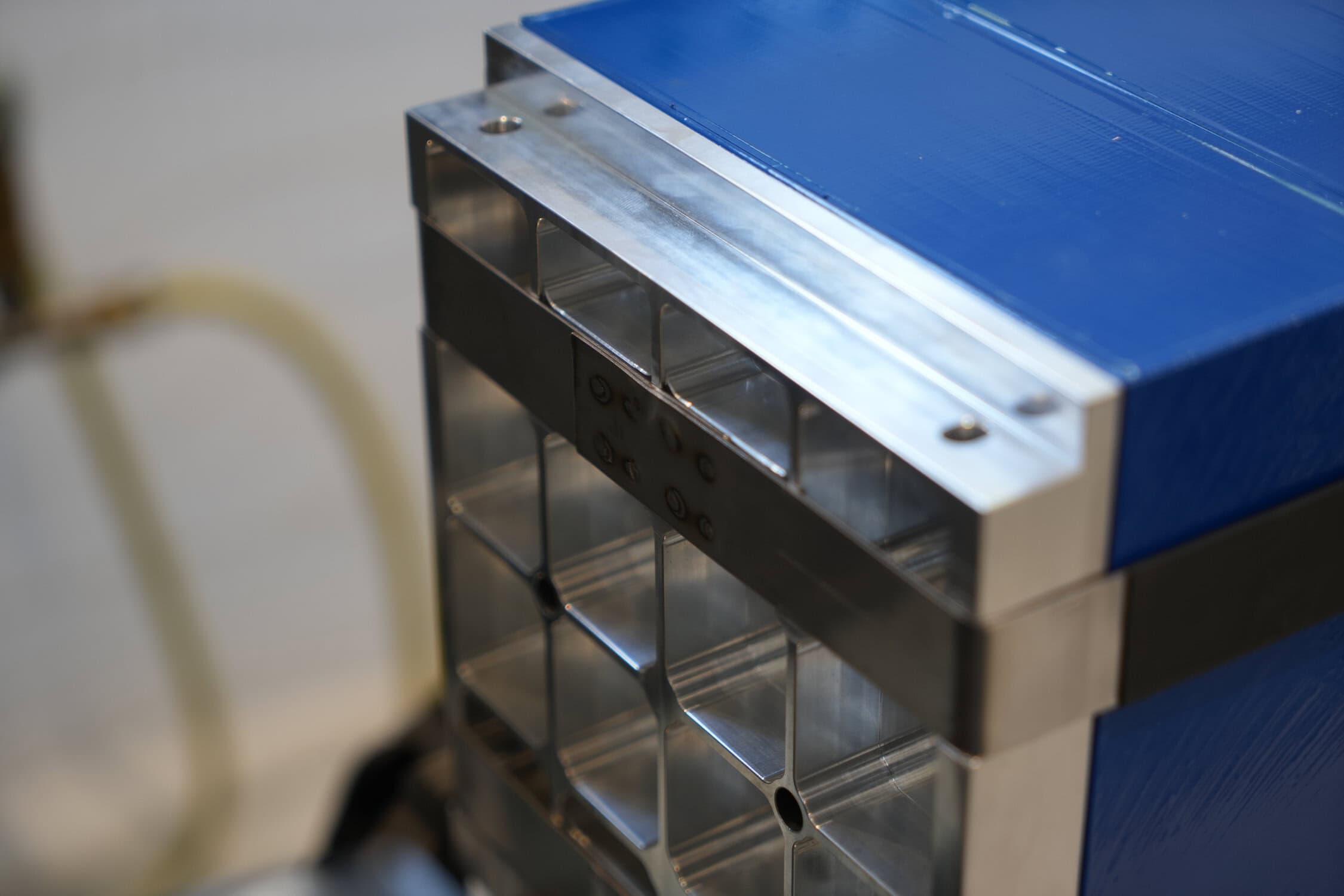
05
Stainless steel bands secure the compressed module
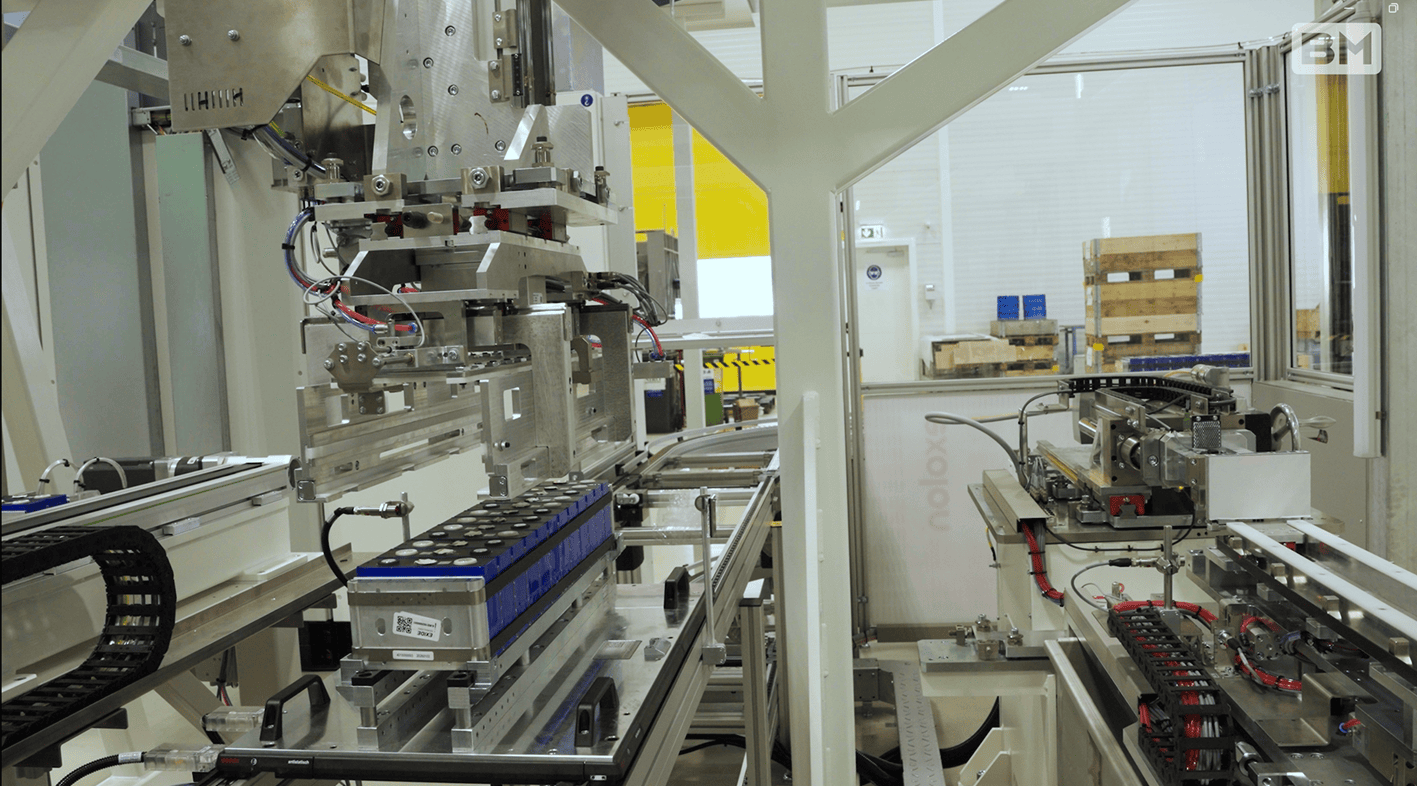
06
The finished module is released for downstream processing

lithium-ion battery module strapping
parameters
process cell stacks with compressed lengths between 700 and 1100 mm
-
cell configuration limits for 280Ah*
* highly adaptable to different cell formats
-
cell thickness 72 mm
(+/- 5 mm)
-
cell width 174 mm
(+/- 5 mm)
-
cell height 207 mm
(+10 mm / -5 mm)
-
terminal distance 123 mm
(+/- 5 mm)
contact
get in
touch
with us