As battery systems continue to evolve for electric mobility and stationary energy storage, optimised cell compression is becoming an increasingly important element of professional module design and manufacturing.
In the development of high-performance lithium-ion battery modules, cell chemistry and electrical design are often the main focus. However, the mechanical integration of the cells is equally important.
For prismatic cells, controlled compression is a key factor influencing lifetime, safety, and overall module performance. During charging and discharging, lithium-ion cells undergo continuous dimensional changes caused by electrode expansion, temperature variations, and ageing effects.
Over the lifetime of a battery, this swelling can become significant. Without a defined compression strategy, the resulting mechanical stress can lead to increased internal resistance, degraded thermal performance and accelerated ageing.
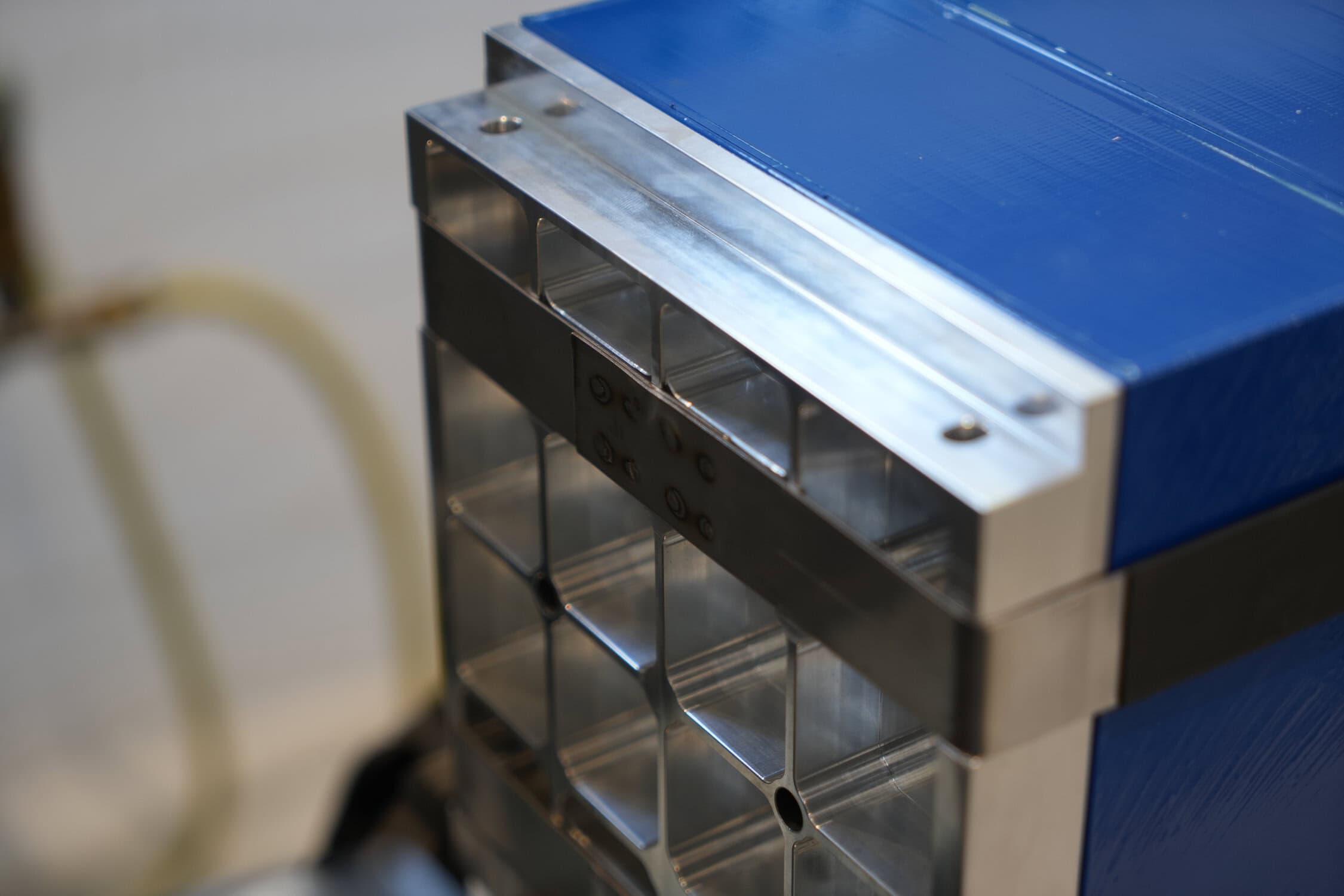
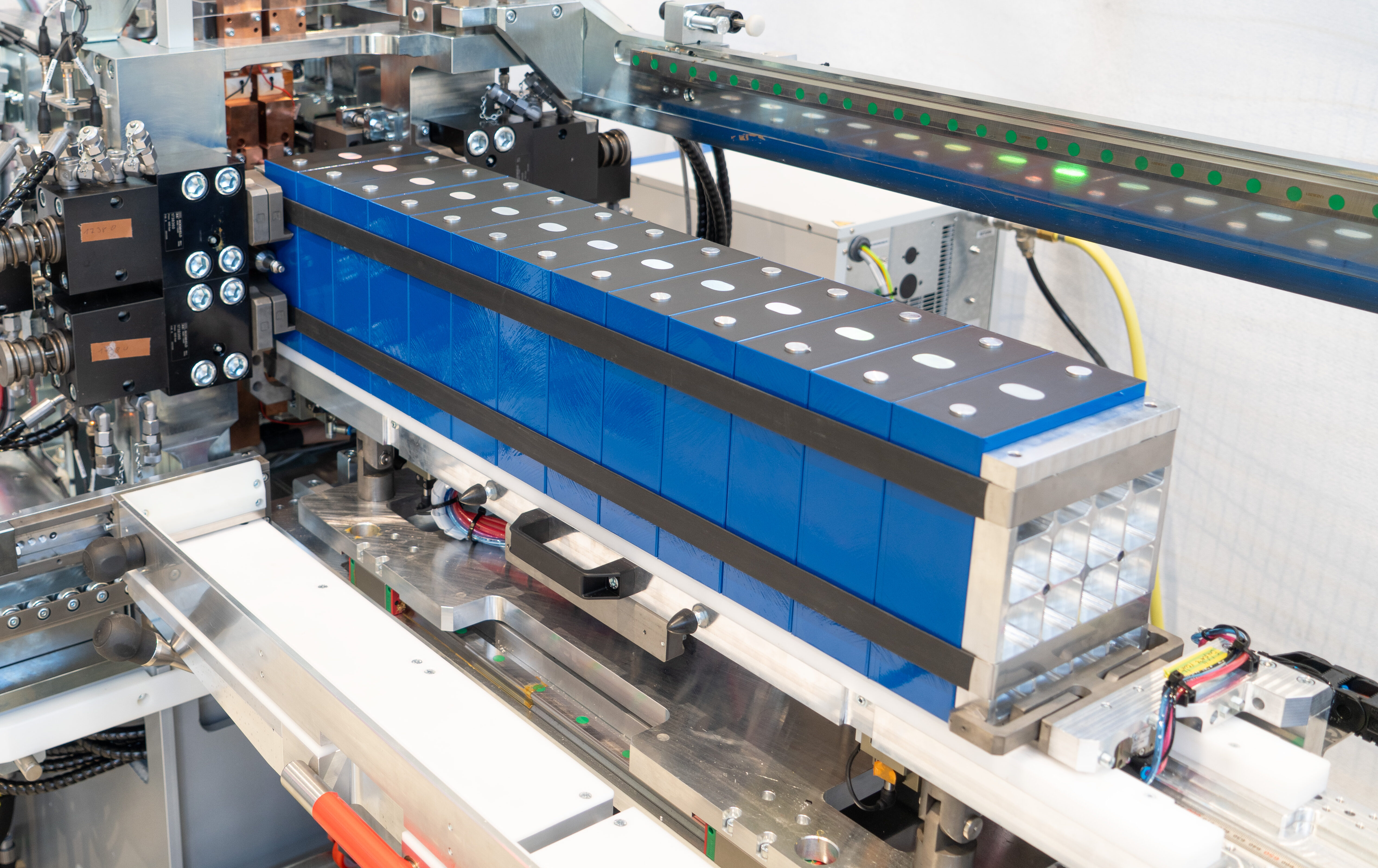
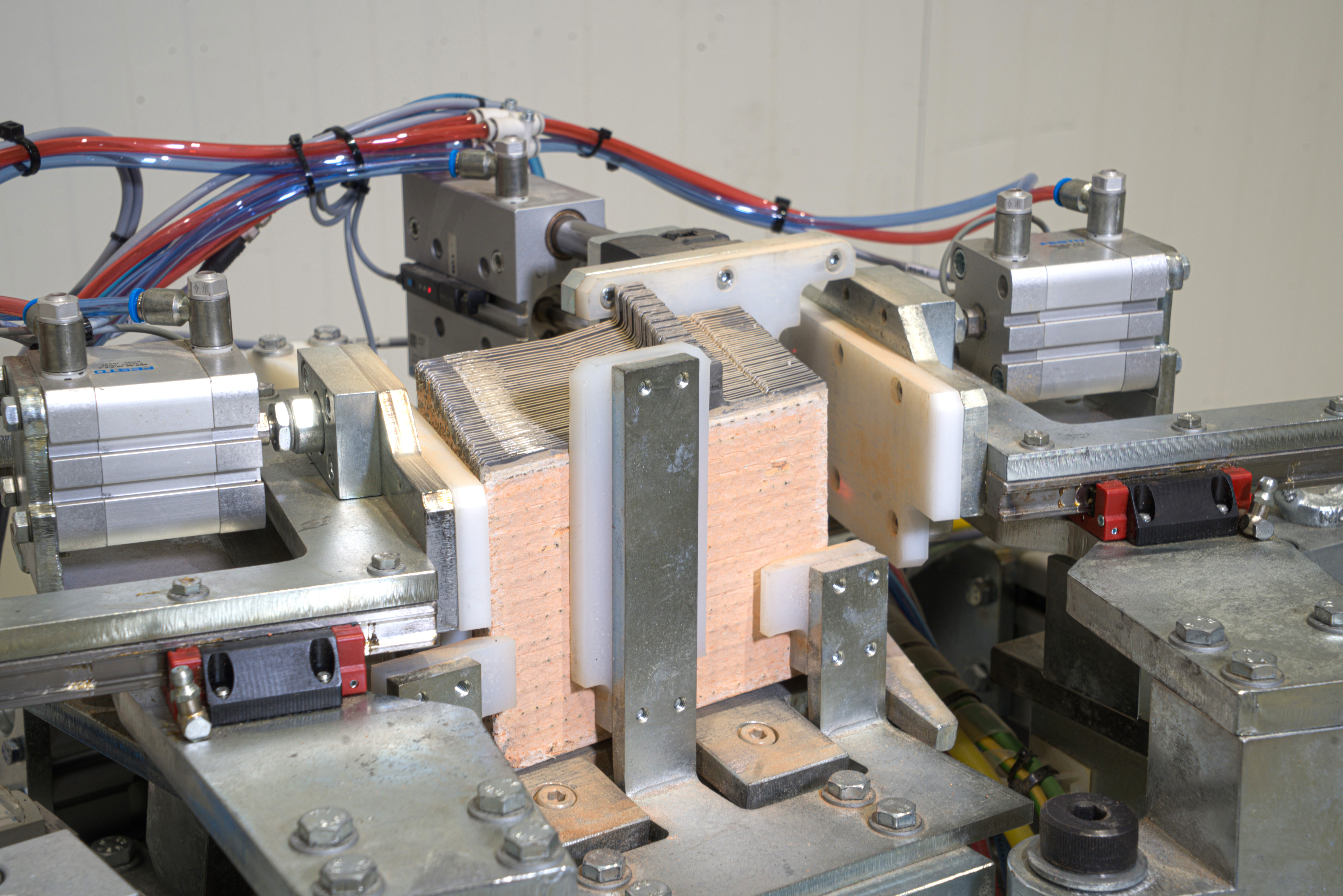
To manage these effects, a battery module is ideally compressed and held in this state by its frame or metal band throughout swelling cycles. The objective is not maximum compression, but consistent and controlled compression.
Insufficient force allows excessive cell expansion and reduces module performance.
Excessive force can damage internal cell structures, create unwanted stress on the frame or strap, and negatively influence cell lifetime.
Key functions and benefits of cell compression:
control of cell swelling Maintains the mechanical integrity of the electrode stack and limits dimensional changes during operation
extended cycle life Reduces mechanical fatigue and helps prevent electrode layer degradation or delamination
enhanced safety and durability Prevents uncontrolled deformation and improves resistance to vibration and mechanical loads
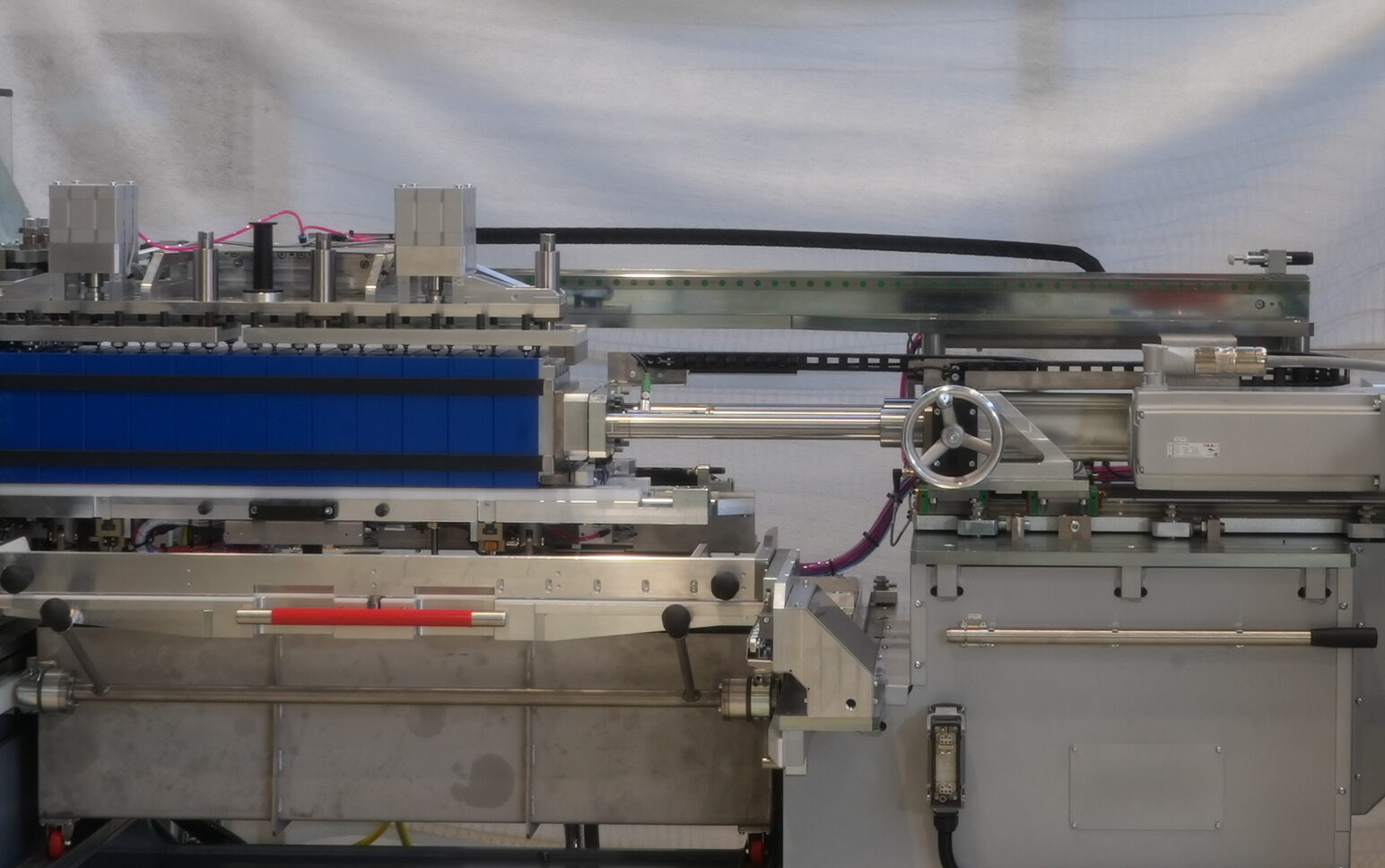
By closing the strap during the compression process, tolerances are compensated and the strap fits perfectly against the end plate.
Marco Hirschbeck
designing a compression and banding system requires
01
compression force
Must be precisely defined according to the cell manufacturer’s specifications. The pressure must be high enough to control swelling but low enough to avoid mechanical damage.
02
force distribution
Uniform pressure across the complete cell surface is essential to prevent local stress concentrations and uneven ageing.
03
preload & retention capability
The frame or strapping system must maintain compression despite cell expansion, material relaxation, temperature changes, and long-term ageing effects.
04
structural stiffness
The end plates and module components must distribute forces evenly and minimize deformation during operation.
05
thermal & mechanical robustness
The system must withstand temperature cycling, vibration, and mechanical loads throughout the battery’s service life.
images
contact
get in touch with us
Rosendahl Nextrom is a global leader in battery, cable & wire and optical fiber production technologies whose goal is to connect your needs with our technology. Quality, customization, product know-how and close cooperation with our partners are our core values.
Rosendahl Nextrom is a global leader in battery, cable & wire and optical fiber production technologies whose goal is to connect your needs with our technology. Quality, customization, product know-how and close cooperation with our partners are our core values.